



- 8 MIN READ
- Views: 186
Mobile App development timelines: From Zero to Launch (A definitive guide)

By Ram Nethaji
Founder

Understanding Mobile App development timelines
The timeline of app development is not just the time of writing code. The actual timeline includes:
- Business understanding
- User flow planning
- Design validation
- Development
- Testing
- Launch
- Post-launch fixes
You can only plan realistically once you get this process. Experienced software development firms pick what to build first.
Stage 1: Clear ideation & requirements (1–2 Weeks)
The first stage is clarity. In this stage, the application development firm and product team understand:
- What problem will the app solve?
- Who are the target users?
- What is the app’s core use case?
- Admin panel and backend requirements
The scope is defined here. If this stage is weak, everything else slows down. Strong app development always starts with clarity.

Stage 2: UX Planning by designers (1–2 Weeks)
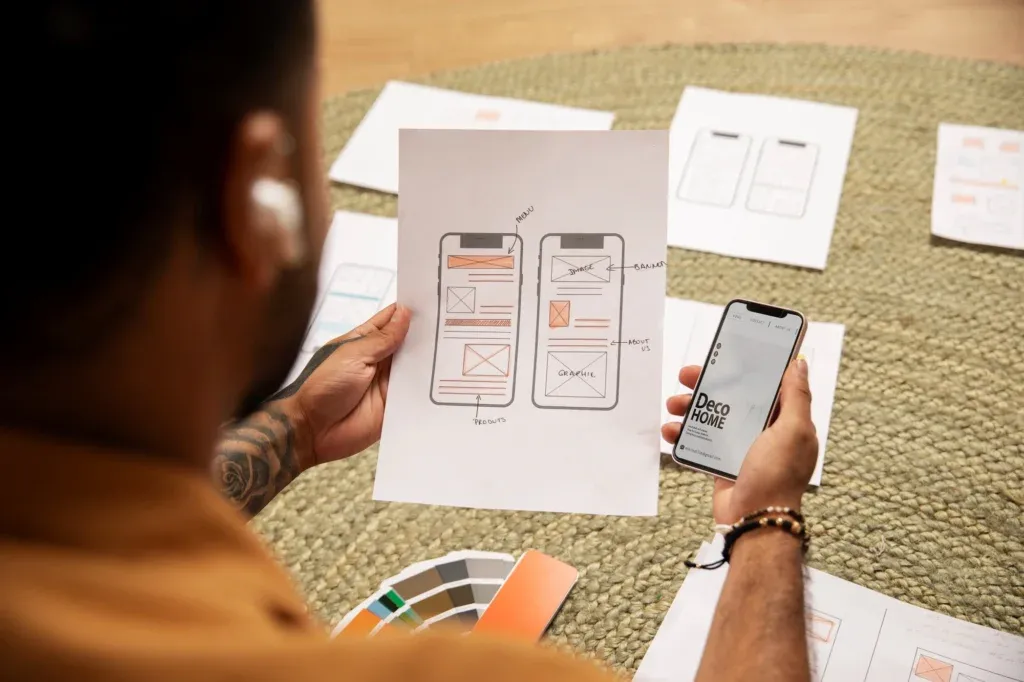
In this phase, the actual user journey is planned. The role of a web designer or UX specialist begins with:
- Screen-to-screen user flow
- Navigation logic
- Actions and responses
- Error states
Jump into app development without UX planning, and you’re prepping for rework later. That’s why pros never skip UX.
Stage 3: UI Design & finalization (2–3 Weeks)
UI isn’t just colors and buttons. It decides whether the user will understand the app or not.
In the UI phase:
- Visual hierarchy is defined
- Brand consistency is maintained
- Accessibility and readability are checked
Development gets way smoother once the UI is locked in. That’s why design plays such a big role in the app development timeline.
Stage 4: Development phase breakdown (6–12 Weeks)
This is the longest phase.
In this stage, software development agencies focus on:
- Frontend development
- Backend APIs
- Database structure
- Third-party integrations
Simple apps mean short timelines. Add roles, permissions, payments, or real-time stuff, and it stretches out naturally. Smart mobile application development companies break it into phases instead of cramming everything at once.
Let Zethic help you build smarter — Not just faster
Stage 5: Testing & quality checks (2–3 Weeks)
Testing isn’t just about fixing bugs. It ensures the app is usable for real users.
Testing includes:
- Device compatibility
- Performance under load
- User flow validation
- Security basics
Good application development firms don’t relegate testing to a last-minute task.
Stage 6: App store launch & rollout (1 Week)
In the launch phase:
- App Store metadata is prepared
- Compliance checks are conducted
- Store approvals are awaited
Timeline hinges on outside stuff like App Store reviews. Smart software development firms build in buffers upfront for those launch hiccups.
Stage 7: Post-launch support & updates (Ongoing)
The work doesn’t end after launch.
With real users:
- New issues arise
- Feature improvements are planned
- Performance tuning is done
Simple apps mean a short time. Add user roles, payments, or live updates, and time grows. Good software development agencies split work into steps, not all at once.
Factors that increase or reduce timelines
The timeline depends on:
- Requirement clarity
- Speed of design approvals
- Number of integrations
- Feedback cycles
- Team experience
Experienced mobile application development companies avoid delays through proper planning
Choosing the Right Mobile Software Development Company
It’s a mistake to look for fast delivery simply. A good mobile software development company:
- Provides a realistic timeline
- Clearly defines the steps
- Maintains documentation
- Provides post-launch support
Cheap shortcuts are costly in the long term.
Final Thoughts
The app development timeline depends on features, so it’s an approximate timeline. It depends on solid planning, clear requirements, and experienced teams. Once you grasp the full path from zero to launch, delays feel less shocking.
At Zethic Technologies, timelines are planned around real business needs, not assumptions
Let Zethic help you build smarter — Not just faster
Frequently Asked Questions
What is the typical app development timeline?
The app development timeline varies depending on the app’s size. Basic apps launch in 2–3 months. Larger builds need 4–6 months. Experienced software development firms break work into phases to avoid delays.
How does an application development firm decide timelines?
An application development firm starts with requirements, user flows, and integrations. Timelines are established for UI & UX development, and testing to ensure realistic app development.
Why is UX design important for timelines?
When UX is unclear, development slows down. Strong UX planning helps software development agencies avoid rework and timeline extensions.
Can app development start without design?
Technically yes, practically no. Without UI/UX clarity, app development faces repeated changes and delays.
How long does testing usually take?
Testing generally takes 2–3 weeks, depending on complexity. Professional mobile software development companies test usability, performance, and stability together.
Can a software development company guarantee timelines?
No responsible software development company gives fixed dates. App store approvals, feedback loops, and scope changes always affect timelines.
Is post-launch work included in app development?
Yes. Post-launch updates are part of long-term app development planning. Reliable teams plan this phase from the beginning.
What mistakes slow down app development timelines?
Unclear requirements, delayed approvals, and frequent scope changes slow things down. Strong coordination with software development firms keeps timelines under control.
