



- 8 MIN READ
- Views: 402
Top 20 Mobile App Development Trends in 2026

By Ram Nethaji
Founder
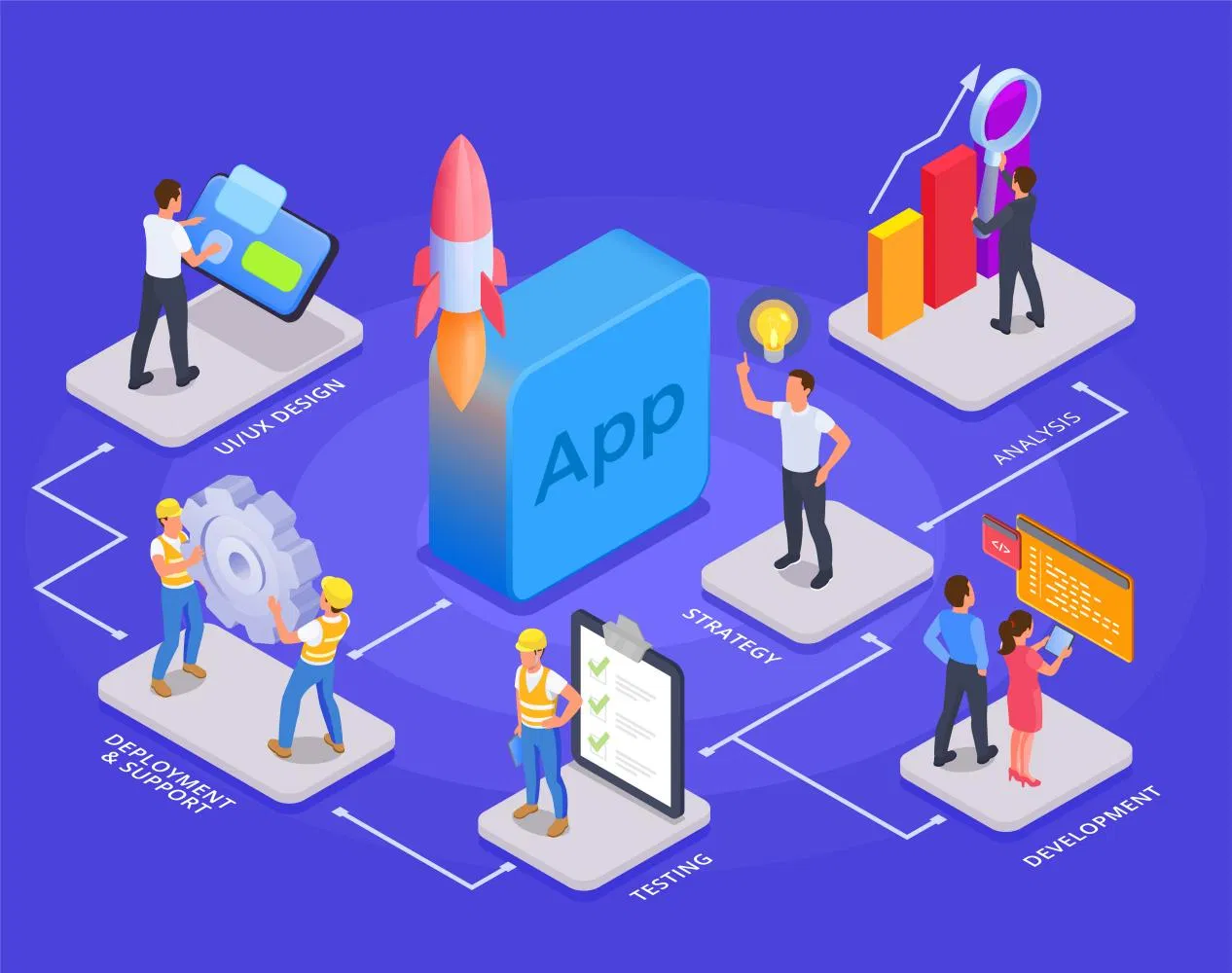
Mobile apps are no longer designed solely to exist in app stores. In 2026, apps are expected to think, adapt, and respond intelligently to their users.
Businesses that follow the most recent mobile app development trends provide seamless experiences, increased engagement, and higher ROI.
What is mobile app development?
Mobile app development is the process of designing, building, deploying, and maintaining applications for smartphones and tablets using modern frameworks, technologies, and design principles.
Today, mobile app development extends beyond coding. This includes:
- User Experience Strategy
- Scalable Architecture
- Performance optimisation
- Security and Data Protection
A professional mobile app development company ensures that apps are not only functional but also future-ready.
Why Mobile App Development Trends Matter for Businesses
Many businesses still view trends as optional. In reality, trends have a direct impact on business performance.
Following the right mobile app development trends benefits businesses:
- Improve user retention.
- Reduce app uninstallation rates.
- Increase engagement and conversions.
- Scale faster and avoid redesigning later.
Today’s users expect apps to be fast, intuitive, and intelligent. Users abandon apps that appear to be out of date.
Top 20 Mobile App Development Trends in 2026
1. AI-Native Mobile Applications
AI-native mobile applications will represent a significant shift in app development in 2026. Instead of treating artificial intelligence as an afterthought, these apps are built from the ground up to incorporate AI. This means that AI influences the app’s behavior, learning, and evolution over time.
AI-native apps use artificial intelligence to:
- Logic behind personalization
- Prioritizing content
- Navigation flow
- User recommendations.
- Automated Decision Making
These applications continuously monitor user behavior, including interaction patterns, feature usage, session duration, and drop-off points. The app automatically adjusts itself based on this information, eliminating the need for manual updates.
For example, if a user repeats a specific action, the app may simplify the flow, suggest shortcuts, or highlight relevant features earlier. Over time, the app becomes more intelligent and efficient for each user.
Why this trend matters:
AI-native apps increase engagement, reduce user effort, and enable businesses to provide intelligent experiences at scale. A mobile app development company that understands AI-native architecture creates apps that remain relevant for longer and adapt more quickly to user needs.
2. Hyper-Personalized User Journeys
Hyper-personalization in 2026 goes far beyond basic content recommendations. Entire user journeys are customized in real time based on behavior, preferences, location, device usage, and interaction history.
This means:
- Onboarding flows differ for different users
- Navigation paths change based on usage patterns
- CTAs adapt based on intent
Features appear or disappear depending on relevance
Each user experiences a slightly different version of the same app, optimized for their specific needs. Instead of forcing users to adjust to the app, the app adjusts to the user.
Hyper-personalization is powered by behavioral analytics and AI models that continuously learn and refine user profiles. The more the app is used, the better it understands what the user wants.
Why this trend matters:
Hyper-personalized journeys increase conversion rates, session duration, and long-term retention. Businesses that invest in this trend see higher engagement because users feel the app “understands” them.
3. Context-Aware Mobile Apps
Context-aware mobile applications adapt intelligently to real-world conditions rather than operating in the same way in all situations. These apps take into account the following factors:
- Time of the day
- Location
- Network Strength
- Device Type
- User Intent
- Usage Environment
For example, when network connectivity is poor, an app may switch to a lightweight mode, prioritize quick actions during peak hours, or automatically display location-specific features.
Context awareness enables apps to respond more naturally and predictably in a variety of situations. The app automatically adjusts settings rather than requiring users to do so manually.
Why does this trend matter?
Context-aware apps are more intuitive and useful. They reduce friction, improve usability, and increase app reliability in real-world scenarios, particularly for users in a variety of settings.
4. Privacy-First App Architecture
In 2026, privacy is no longer treated as a compliance requirement; it is a core design principle. Privacy-first app architecture ensures that data protection is built into the foundation of the app, not added later.
Key characteristics of privacy-first apps include:
- Minimal data collection.
- Transparent permissions usage
- User-controlled data access.
- Local data processing whenever possible.
- Secure storage and encryption by default
Instead of collecting excessive data, apps focus only on what is necessary to deliver value. Users are clearly informed about how their data is used and can easily manage permissions.
Why does this trend matter?
Privacy-first architecture fosters user trust, lowers security risks, and safeguards businesses against long-term legal and reputational issues. Users are more likely to engage with apps that they feel comfortable using.
5. Edge-First Mobile App Development
Edge-first mobile app development brings data processing closer to the user’s device, rather than relying solely on centralized servers. This allows apps to complete tasks more quickly and efficiently.
- Using edge-first architecture
- Apps respond instantly
- Latency is reduced
- Offline functionality improves
- Real-time features work more smoothly
This approach is especially important for apps that use real-time interactions, AI features, or data-intensive processes. Real-time features perform better when data is processed locally or near the user. Even in low-connectivity scenarios.
Why does this trend matter?
Edge-first development increases performance, reliability, and user satisfaction. It allows apps to run smoothly across a variety of network conditions and geographic regions.
6. Modular App Design
In 2026, mobile applications will no longer be built as single, tightly connected systems. Instead, they are built using a modular app architecture, with each feature or functionality existing as its own module.
A modular app separates core components like authentication, payments, notifications, dashboards, and user profiles into individual units. Each module can be created, tested, updated, or replaced without affecting the rest of the application.
This approach enables development teams to:
- Update the features independently.
- Fix bugs without affecting unrelated sections
- Add new functionality without rewriting existing code
- Scale specific features based on usage
For example, if a business wants to improve only the checkout experience, developers can update that module alone without touching the entire app. This significantly reduces risk during updates and deployments.
From a business perspective, modular app design also supports faster innovation. Teams can experiment with new features, roll out changes gradually, or disable underperforming modules without impacting the full user base.
Why does this trend matter?
Modular app design reduces long-term development costs, shortens release cycles, and makes applications easier to maintain and scale. Businesses benefit from faster updates, improved stability, and the flexibility to adapt quickly to market changes.
7. UX-led UI Design
UX-led UI design marks a shift in the way mobile applications are planned and built. Development begins with user experience strategy rather than visual elements such as colors, layouts, or animations.
In 2026, designers will focus on:
- What users hope to achieve
- How easily they can finish tasks
- Where confusion or friction can occur
- How users feel at every stage of the journey
The visual interface is introduced only after a smooth and logical experience has been defined. This ensures that the UI enhances rather than detracts from the user experience.
UX-led design prioritizes the following:
- Navigation is clear
- Minimum cognitive load
- Predictable interactions
- Screen flow is logical
When UX guides UI, apps feel intuitive even to first-time users. Users do not require tutorials or instructions because the design naturally guides them.
This method also improves accessibility and inclusivity, making apps usable by a broader audience regardless of technical skill or familiarity.
Why does this trend matter?
UX-led UI design boosts user confidence, lowers frustration, and increases retention. Apps built on a solid UX foundation are easier to use, faster to learn, and more likely to be used again.
8. Invisible Authentication
Invisible authentication is changing the way users log in and interact with mobile apps. Traditional passwords will be phased out in favor of silent, continuous verification methods that operate in the background.
Instead of requiring users to repeatedly log in, apps rely on:
- Biometric authentication (fingerprint & facial recognition)
- Device security and trust signals
- Behavioral patterns, such as typing speed, gestures, and usage habits.
These signals work together to verify identity while preserving the user experience. Authentication occurs automatically as the user continues to use the app.
Invisible authentication also increases security. Because it does not rely on passwords, it eliminates risks like password reuse, phishing, and compromised credentials. If suspicious behavior is detected, the app may silently request additional verification or limit access.
This provides users with a seamless experience: no friction, no repeated logins, and no unnecessary interruptions.
Why does this trend matter?
Invisible authentication improves security while ensuring a smooth user experience. It reduces login friction, boosts trust, and safeguards sensitive data without making security seem intrusive.
9. Multimodal Interfaces
Multimodal interfaces represent a significant shift in how users interact with mobile applications in 2026. Modern apps are designed to support multiple modes of interaction at the same time, rather than relying solely on a single input method like touch.
This includes:
- Touch-based interaction.
- Voice Commands
- Camera-based inputs.
- Gesture recognition
- Motion- and sensor-based controls
The goal of multimodal design is to allow users to interact with the app in the most natural and convenient way possible given their situation. For example, a user could use voice commands while driving, touch while browsing casually, or camera input to scan documents or products.
Multimodal interfaces also change dynamically. If one interaction mode is unavailable or inconvenient, the app seamlessly switches to another. This adaptability reduces friction and increases accessibility for users with diverse abilities, environments, and preferences.
Multimodal apps necessitate careful UX planning. Each interaction method should be intuitive and consistent, without overwhelming the user. Successful multimodal design ensures that all inputs collaborate rather than compete with one another.
Why does this trend matter?
Multimodal interfaces make apps more inclusive, accessible, and user-friendly. They improve usability across different contexts and allow businesses to reach a broader audience while delivering smoother, more natural experiences.
10. Design for Short Attention Spans
Users’ attention spans are shorter than ever. Users decide in a matter of seconds whether an app is useful or worth keeping. As a result, mobile app design is increasingly focused on providing instant clarity and value.
Designing for short attention spans involves:
- Minimal onboarding steps
- Clear value proposition on the first launch
- Simple navigation with fewer options
- Fast access to core features
- Reduced cognitive load
Apps no longer assume users will “learn” how to use them. Instead, the interface guides users in a natural way, allowing them to complete key tasks without the need for instructions or tutorials.
This trend has had a significant impact on layout decisions, content structure, and interaction design. Screens are cleaner, actions are more targeted, and unnecessary elements are removed. Each component on the screen must justify its existence.
Performance is also very important. Even minor delays or confusing flows can lead users to abandon the app. As a result, speed, responsiveness, and clarity are viewed as essential design requirements rather than enhancements.
Why does this trend matter?
Designing for short attention spans lowers drop-off rates, improves first-time user retention, and boosts overall engagement. Apps that provide immediate value are more likely to be remembered, used frequently, and recommended by users.
Let Zethic help you build smarter — Not just faster
11. Advanced Cross-Platform Development
Cross-platform development in 2026 has progressed far beyond simple code reuse. Previously, cross-platform apps often felt slower or more inconsistent than native apps. That gap has now largely closed.
Modern cross-platform frameworks enable developers to create a single codebase while delivering
- Near-Native Performance
- Platform-specific gestures.
- OS-compatible animations and UI behavior
- Hardware-based integrations
These frameworks intelligently adapt UI components and interactions based on the operating system, ensuring that Android and iOS users receive experiences that are consistent with their platform expectations.
Cross-platform development improves team collaboration. Feature updates, bug fixes, and UI changes can all be deployed simultaneously across platforms, reducing inconsistencies and delays.
Why does this trend matter?
Advanced cross-platform development shortens time-to-market, reduces development costs, and ensures consistent user experiences while maintaining quality and performance.
12. Intelligent Offline Experiences
Offline capabilities will go beyond simple content access. Modern apps are designed to function intelligently even without an internet connection, allowing users to complete tasks with ease. Modern apps are designed to function intelligently even without an internet connection, allowing users to complete tasks with ease.
Intelligent offline apps:
- Cache important content automatically
- Allow form submissions and actions offline
- Save user activity securely on the device
Sync data intelligently once connectivity is restored. Allow for offline form submissions and actions. Keep user activity secure on the device. Instead of blocking users when connectivity fails, the app changes its This strategy is particularly important for global audiences, remote locations, and users with intermittent internet access. , some features may become unavailable while others queue actions in the background. in the background.
This approach is especially important for global audiences, remote locations, and users with inconsistent internet access.
Why does this trend matter?
Intelligent offline experiences improve reliability, reduce frustration, and build long-term user trust. Users are confident that the app will work at all times and from any location. Once connectivity is restored, synchronize data intelligently. Once connectivity is restored, synchronize data intelligently.
13. Sustainable App Development
Sustainability has become an important consideration in mobile app development. Apps will be designed to consume less energy, reduce server load, and optimize background processes.
Sustainable app development is focused on:
- Efficient code execution
- Reduced battery consumption
- Effective code execution
- Improved network requests
- Minimal background activity
- Smart Data Synchronization
These enhancements not only help the environment, but they also improve device performance and user satisfaction. Users are more likely to keep apps that use less battery power and resources.
From a business standpoint, sustainability reflects responsible brand values and long-term thinking.
Why does this trend matter?
Sustainable apps outperform, last longer on devices, and promote a positive brand image while lowering infrastructure costs.
14. App-as-a-Service (AaaS)
Mobile apps are no longer considered one-time deliverables. Instead, they are managed as living services that evolve in response to user feedback and data.
With the app-as-a-service model:
- Features are released incrementally
- Updates are delivered continuously.
- User feedback drives improvement.
- Experiments and optimizations occur live.
This approach enables businesses to respond quickly to changing customer needs and market conditions. Instead of waiting for major version updates, improvements are implemented gradually and safely.
AaaS also aligns app development with modern SaaS best practices, ensuring long-term relevance and adaptability.
Why does this trend matter?
Treating apps as services ensures that they remain competitive, flexible, and aligned with actual user needs over time.
15. Predictive UX
Predictive UX takes personalization a step further by anticipating user needs before actions are taken. Instead of reacting to inputs, apps proactively suggest the next best action.
Predictive UX is powered by:
- Behavioral analysis
- Usage patterns
- Historical data.
- Context Awareness
For example, an app may surface frequently used features at the appropriate time, suggest shortcuts, or preload content based on anticipated behavior.
This requires less effort from users and makes interactions feel more natural and intuitive. Over time, the app feels smarter and more in tune with individual user preferences.
Why does this trend matter?
Predictive UX boosts efficiency, lowers friction, and provides intelligent experiences that feel personalized without being intrusive.
16. Secure-by-Design Development
Security will no longer be an afterthought. Secure-by-design development ensures that security concerns are addressed at all stages of the app’s lifecycle.
This includes the following:
- Secure Architecture Planning
- Store encrypted data
- APIs are protected
- Secure authentication flows
Businesses that address security early can reduce vulnerabilities and avoid costly fixes later. Secure-by-design also improves adherence to global security and privacy standards.
Why does this trend matter?
Built-in security protects sensitive data, increases user trust, and lowers long-term risk for businesses.
17. Human-Centered Micro-Interactions
Micro-interactions are small design elements that react to user input, such as animations, confirmations, transitions, and feedback cues. In 2026, these interactions are designed with a strong emphasis on human emotion and usability.
Well-planned micro-interactions:
- Assure users that actions are successful
- Reduce confusion and uncertainty
- Guide users intuitively
- Make the interfaces feel responsive and alive
Micro-interactions are functional rather than decorative, as they improve clarity and emotional engagement.
Why does this trend matter?
Human-centered micro-interactions improve usability, establish emotional connections, and make apps appear polished and trustworthy.
18. Data-Driven UI Decisions
UI design in 2026 is guided by actual user data rather than assumptions or personal preferences. Design teams use analytics to understand how users interact with the app.
Data-driven interface decisions are based on:
- Heatmaps
- Analyzing user flows
- Session recordings
- Conversion funnels
- Drop-off metrics
This data assists teams in identifying friction points, optimizing layouts, and improving navigation logically. Design changes are continually tested, measured, and refined.
Why does this trend matter?
Data-driven UI results in measurable increases in engagement, usability, and conversion rates.
19. Industry-Specific App Experiences
Generic apps are losing relevance as users demand experiences that are tailored to their specific industry requirements. The apps are highly customized for industries such as healthcare, fintech, education, logistics, and real estate.
Industry-specific apps include
- regulatory requirements
- User Behavior Patterns
- Workflows tailored to specific domains
- Industry Standards
This customization leads to more meaningful functionality and higher user satisfaction.
Why does this trend matter?
Industry-specific experiences increase value, improve adoption, and provide greater competitive differentiation.
20. Scalability-Focused App Design
Scalability is no longer delayed until after product success. Even MVPs in 2026 are designed with long-term growth in mind.
The scalability-focused design includes:
- Architecture is flexible.
- Modular components.
- Infrastructure that is ready for the cloud
- UI systems that can adjust to new features
This ensures that apps can handle more users, new markets, and additional functionality without requiring major redesigns.
Why does this trend matter?
Scalable app design avoids costly rework, promotes long-term growth, and ensures a smooth transition as business needs change.

Developing Mobile Applications with a Long-term Vision
Successful mobile applications are designed with future growth in mind. A clear development strategy ensures that the app is scalable, secure, and easy to update as business needs change. Early planning of architecture, user experience, and performance helps to avoid costly redesigns in the future.
Practical Challenges of Mobile Application Development
Developing mobile applications frequently includes challenges such as managing complexity, ensuring performance, maintaining security, and aligning features with actual user needs. Addressing these issues early on promotes stable and dependable applications that perform well over time.
Why Choose Zethic for Mobile App Development?
Choosing the right mobile app development services as a partner is critical for developing high-quality mobile applications. Zethic collaborates with businesses to design and develop user-friendly, scalable mobile applications. From concept to launch and beyond, Zethic ensures that applications are built to meet long-term business goals.
Where Mobile Apps Are Going Next
Mobile applications are evolving to provide smarter, more responsive, and seamless experiences. Applications that prioritize simplicity, adaptability, and performance will continue to meet evolving user expectations and business needs.
Transforming Mobile App Ideas into Sustainable Products
A successful mobile application should provide consistent value over time. Businesses can turn mobile app ideas into scalable, sustainable products that support long-term growth and changing requirements by combining careful planning, strong execution, and the expertise of a trusted development company such as Zethic.
About Zethic Technologies
Zethic Technologies is a trusted Web & Mobile App Development Company providing Custom Software Development Services to startups and growing businesses. We combine planning, development, and long-term thinking to deliver stable digital products.
Let Zethic help you build smarter — Not just faster
Frequently Asked Questions
What does a mobile application development company do?
Zethic, as a mobile application development company, designs, develops, tests, and maintains mobile apps for Android, iOS, and cross-platform environments. We manages the complete mobile application development services, including idea validation, UI/UX design, development, deployment, and long-term support. This approach ensures applications are scalable, secure, and future-ready while aligning with business objectives.
Why should businesses choose professional mobile application development services?
Zethic’s mobile application development services assist businesses in creating dependable, high-performance apps that align with user expectations and business objectives. Expert services provide improved security, faster performance, a modern UI/UX, and long-term scalability while lowering development risks and costs.
How do mobile app development trends impact businesses in 2026?
In 2026, mobile app development trends will focus on AI-driven experiences, personalization, privacy-first architecture, and scalability. Businesses that follow these trends benefit from increased user engagement, better retention, higher ROI, and apps that remain relevant as technology and user behavior change.
Why is India a preferred destination for mobile app development?
India is a global hub for mobile app development because of its skilled workforce, cost-effective solutions, and strong technical expertise. Choosing a mobile application development company in India enables businesses to create high-quality apps while staying within budget and meeting faster delivery deadlines.
Why is Bangalore known for mobile application development?
Bangalore is known as India’s technology capital, and it is home to numerous startups, enterprises, and innovation centers. Mobile app development services in Bangalore benefit from access to experienced developers, strong UX talent, and exposure to global technology standards, making it ideal for building modern mobile apps.
How do I choose the right mobile application development company?
When selecting a mobile application development company, think about their experience, portfolio, technical expertise, understanding of trends, and post-launch support. Zethic values scalability, security, user experience, and long-term business value over development alone.
What challenges are involved in modern mobile application development?
Common challenges in mobile application development include managing complex features, ensuring cross-device performance, maintaining data security, and keeping up with rapidly changing trends. Working with an experienced mobile application development services provider allows you to address these challenges more efficiently.
How long does it take to develop a mobile application?
The timeline for mobile application development is determined by the app’s complexity, features, platform, and customization. A basic app may take a few months, whereas advanced, scalable apps necessitate more time for design, development, testing, and optimization.
How do mobile application development trends shape the future beyond 2026?
Beyond 2026, mobile app development will prioritize smarter automation, predictive UX, sustainability, and industry-specific experiences. Businesses that invest early in trend-driven development will gain a competitive advantage by creating apps that are easily adaptable to future requirements.
