

Skip links

How to Build a Custom Payment Gateway in 2026 (Cost, Tech Stack, and Strategy)

Picture of By Ram Nethaji

By Ram Nethaji

Founder

AI Fintech App Development

User Interface Design
User Experience Design

AI-Powered Finance Solutions

AI-Based Payment App Development
Most businesses don’t wake up one day and decide to build a payment gateway.

It usually starts with a problem. Fees are getting too high. Payment failures are increasing. Product teams cannot build the experience they want.

That’s when the real question comes in.

Is it worth building a custom payment gateway in 2026?

The Real Cost of Using Third-Party Payment Gateways


Third-party gateways like Stripe charge 2.9% + $0.30 per US card transaction, rising to 4.4% + $0.30 for international cards, while Razorpay starts at 2% + GST in India.

At lower volumes, this is manageable. But as your business grows, payment gateway charges become a major expense.

Option

Transaction Fee

Third-party payment gateways

1.5% – 3.5%

Custom payment gateway (at scale)

0.3% – 0.8%

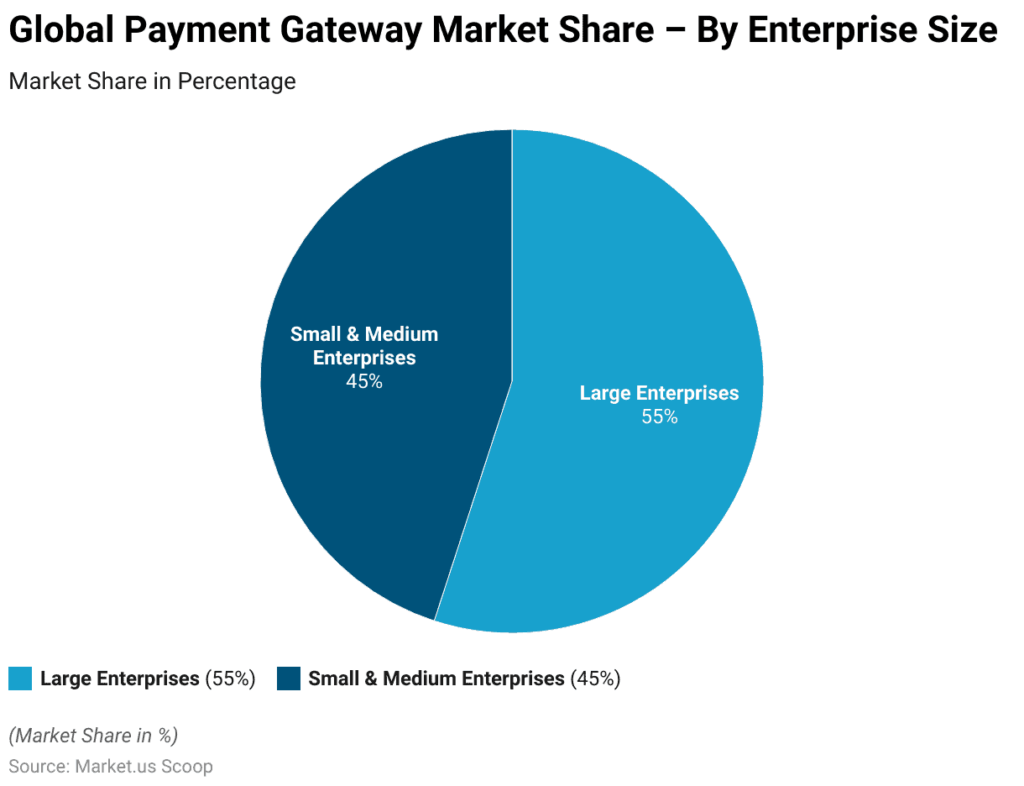
If your monthly processing volume is high, building your own payment processing system can significantly reduce costs.
Benefits of Custom Payment Gateway Software

  • Full Control & Compliance
    Design payment logic, merchant onboarding flows, transaction routing (e.g. UPI, Visa, global APMs), and duty-cycle settlements to suit business logic and regional laws (e.g. RBI/UPI regulations).
  • Lower Long-Term Costs
    Instead of 2.9% + ₹2 or ~30 cents per transaction, direct acquirer integrations and optimized routing can reduce fees at scale — ideal for enterprise merchants and SaaS providers.
  • Enhanced Security Architecture
    Full ownership over PCI-DSS scoping, tokenization (HSM/in-house vault), idempotency handling, retry logic, and fraud engines. Achieve audit readiness without vendor lock-in.
  • Seamless Tech Ecosystem Integration
    Embed the gateway into CRM/ERP, loyalty platforms, fraud workflows, CRM chatbots reducing user friction and manual reconciliation.
  • Scalability & Regional Flexibility
    Support multi-currency, regional rails (e.g. UPI, IMPS), cross-border payment routing, sub‑merchant boarding, split payments, or wallet systems custom built to your UX and API needs.
  • Revenue Opportunities Beyond cost savings, offer analytics-as-a-service or gateway-as-a-service models, charging subscription fees or tiered processing plans.

Payment Gateway Development Cost in 2026

A custom payment gateway costs between $30,000 and $500,000+, depending on complexity, compliance, and scale.

It only makes financial sense if your business processes more than $10–15 million per month, where transaction fee savings can offset development and maintenance costs.


Gateway Type

Features Included

Cost Range

Basic Gateway

Card payments, simple checkout, basic security

$30,000 – $60,000

Mid-Level Gateway

Multiple payment methods, dashboards, fraud detection, recurring billing

$80,000 – $250,000

Enterprise Gateway

Multi-currency, global payments, advanced fraud systems

$250,000 – $500,000+

A basic setup may work for startups. But most businesses aiming for scale need a secure and scalable payment gateway architecture, which increases cost.

AI Is Changing Payment Gateway Development

In 2026, AI in fintech development is reducing both cost and time.

Approach

Cost Range

Timeline

Key Advantage

Traditional Development

$120,000 – $400,000+

6–12 months

Standard enterprise build

AI-First Development

$40,000 – $160,000

8–20 weeks

Faster and cost-efficient

AI-Based MVP

$80,000 – $120,000

14–20 weeks

Faster go-to-market

AI does not replace developers. It improves speed, testing, and efficiency in building modern payment gateway APIs and backend systems.

Development Cost by Region

The cost of payment gateway software development also depends on where your team is located.

Region

Hourly Rate

Cost Impact

India / Southeast Asia

$25 – $50/hr

Most cost-effective

Eastern Europe

$40 – $80/hr

Balanced pricing

Western Europe

$70 – $120/hr

High cost

USA / Canada

$80 – $150+/hr

Most expensive

Outsourcing to regions like India can significantly reduce your total payment gateway development cost without compromising quality.

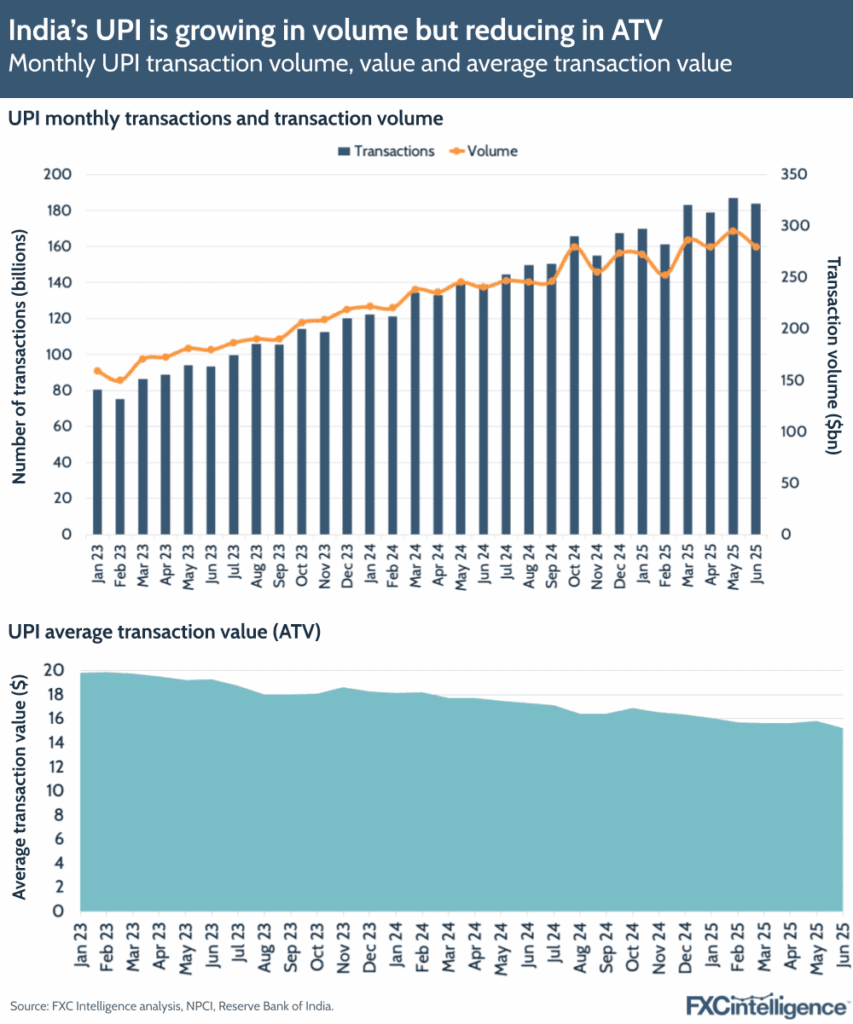
India/SE Asia developer rates remain $25–$50/hour, vs. $80–$150+ in USA/Canada; UPI hit 22.6B transactions (₹29.5 lakh crore) in March 2026 alone, with RBI mandating 2FA from April 

Source: 

  1. https://www.bajajfinserv.in/rbi-new-digital-payment-rules-april-2026
  2. https://www.aalpha.net/articles/payment-gateway-development-cost/

Timeline for Payment Gateway Development

Building a secure payment system involves more than coding. It includes compliance, integrations, and testing.

Project Type

Timeline

Basic Gateway

3–6 months

Mid-Level Gateway

6–9 months

Enterprise Gateway

9–18 months

AI-First MVP

14–20 weeks

Even with faster development, factors like bank integrations, UPI certification, and PCI DSS compliance can impact timelines.

When Should You Build a Custom Payment Gateway?

Not every business needs to build one.

Business Stage

Recommendation

Early stage

Use third-party providers

Growth stage

Consider hybri6d solutions

High volume business

Build a custom payment gateway

If your monthly transaction volume is below $10–15 million, using existing platforms is usually more practical.

Why UPI Integration Is Critical in India

If you are building for India, UPI payment integration is not optional.

UPI dominates digital transactions, and any modern payment gateway solution must be designed around it.

This includes:

  • Smart routing for UPI transactions
  • Retry logic for failed payments
  • Strong reconciliation systems

Treating UPI as just another payment option leads to poor performance.

Common Mistakes in Payment Gateway Development

Many teams underestimate the complexity of building a secure payment gateway system.

Ignoring PCI DSS compliance
Payment systems must meet strict PCI DSS compliance requirements. Failing to plan this early can lead to expensive redesigns.

NOTE: PCI-DSS Level 1 compliance adds $200,000–$500,000 initially for high-volume platforms; build custom only if processing >$10M/month for fee savings (0.3–0.8% at scale).

Underestimating bank approvals
Integrations with banks, card networks, and UPI systems take time and cannot be rushed.

Weak reconciliation systems
Payment processing is only half the job. Reconciling settlements, refunds, and chargebacks is equally critical.

10-Step Guide to Build Your Custom Gateway

1 Understanding the Core Architecture

Identify key components of your custom payment gateway architecture:

  • Merchant onboarding / KYC flows
  • Checkout UX / SDKs: hosted, redirection (PCI-SaaS), or inline (jet-enabled REST APIs)
  • Routing & connector engine: adapters to banks, UPI, card switches
  • Processing backend: tokenization, failure management, idempotency, webhook orchestration
  • Dashboard & Reconciliation UI: real-time settlement, disputes, refund flows
  • Analytics & Logs: minimal latency pipelines, transaction history, fraud scoring

This architecture is critical to both payment gateway software development and payment gateway API development workflows.

2 Market & Merchant Research

  • Market segmentation: eCommerce, logistics SaaS, embedded finance, subscriptions
  • Competitor audit: Stripe, Razorpay, Paytm assess fee models, API ease, localisation gaps
  • Merchant interviews: identify pain from refunds, delayed settlements, cross-border challenges, or manual reconciliation overheads

Use these insights to clearly define your unique value proposition and API differentiation points.

3 API & System Design

  • API-First Strategy: RESTful JSON endpoints (with optional GraphQL support) for all operations — payments, refunds, merchant onboarding, reports. Define contracts using OpenAPI and provide Postman collections and client SDKs (JavaScript / Flutter, etc.)
  • Microservice & Event-Driven Architecture: separate modules for routing, tokenization, fraud, reconciliation; use Apache Kafka or RabbitMQ for high-throughput events, asynchronous retry paths
  • Modularity: implement connector adapters (e.g. for UPI, IMPS, Visa/Mastercard) to allow easy rail addition or replacement
  • UI Flows: support both white-label web checkout and in-app SDK. Prioritize smooth flow with hosted pages and error resilience via webhooks and retry logic

4 Tech Stack & Infrastructure

  • Backend Languages: Go or Java (Spring Boot/Camel) for high-throughput rails; Node.js/TypeScript preferred by JS-native teams.
  • Databases: SQL (PostgreSQL/MySQL) for transactional fidelity; NoSQL (MongoDB/Clickhouse) for logs and analytics
  • Security Layers: HSM-managed PCI-DSS vaults, encryption at rest/transit, segregated key store, tokenization middleware
  • API Tools: OpenAPI v3, automated schema validation, mock servers for partner onboarding
  • DevOps: Deploy on AWS/Azure/GCP using Kubernetes/EKS/AKS or Terraform-managed Lambdas. Use autoscaling, retries, circuit-breakers for fault tolerance

5 Building Processing & Connector Modules

  • Acquirer connectors: build configurable pluggable modules for each acquirer or rail. For UPI, mirror NPCI’s UPI API (IMPS + UPI overlay), for cards integrate ISO 8583 or REST APIs from acquiring banks.
  • Tokenization Layer: map card details into tokens that your system uses internally; ensure compliance with PCI SAQ A or SAQ D based on scope
  • Payment orchestration: implement routing logic — e.g. if UPI fails, fallback to IMPS or scheduled retry. Support refund paths, partial settlement updates.
  • Webhooks & Notifications: expose endpoints for merchant callback URLs; send notifications asynchronously. Secure endpoints with time-stamped digital signatures and replay protection.
  • Idempotency & Fault Handling: ensure that repeating a charge event does not double bill. Use idempotency keys and FIFO processing to prevent duplication.

6 Bank & Rail Integrations

  • Regulatory Acquirer Partnerships: In India, register as PPI or aggregator per RBI requirements; connect to NPCI sandbox environments. Globally, connect directly to VISA/Mastercard or via payment switches.
  • Sandbox & Certification: Use NPCI certification path for UPI, Visa/Mastercard sandbox for cards; perform settlement reconciliations testing.
  • Settlement Flows: handle nodes like T+1 or T+2 cycles, ambiguous settlement states, chargeback handling. Maintain nodal account ledger.
  • Reconciliation Engine: auto-match incoming settlement files with internal transactions; highlight mismatches for finance teams.

7 Compliance, Licensing & Security

  • PCI‑DSS Compliance: Identify scope (SAQ-A vs SAQ-D). Implement the 12 control groups: firewall, encryption, access control, logging, vulnerability scanning, pen-testing.
  • RBI Licensing (India): aggregator/KYC/Government license requirements; real estate-specific UPI merchant categories; IMPS/UPI switching scans
  • Data Privacy Laws: GDPR, PDPA, CCPA — handle encrypted PII (names, phone numbers), obtain consent templates, support deletion and user portability.
  • Fraud Mitigation: integrate 3-D Secure, risk scoring with ML or rule engine (IP velocity, device fingerprinting, geolocation), blacklists, time-based OTP throttling.
  • Pen Testing & Certifications: partner with third-party security audit firms for annual testing and risk scoring

8 Testing Strategy

  • Unit and Contract Testing: ensure all API endpoints and internal modules catch edge cases—simulate all ard codes and failure responses.
  • Integration Testing: connect with sandbox environments: NPCI’s test harness, VISA/Mastercard simulator, UAT merchants to simulate refunds, reversals, rollbacks.
  • Performance & Stress Testing: simulate peak loads like 1000 TPS to test queue back-pressure; introduce network delays, simulate acquirer downtimes.
  • UAT with Pilot Merchants: conduct end-to-end testing (checkout → webhook → settlement → dashboard → refund/dispute). Validate flows with real merchant UX.
  • Fraud Scenarios: simulate chargebacks, duplicate tokens, synthetic identity payments, and verify detection and reversal workflows

9 Deployment & Production Launch

  • Deployment Strategy: use blue-green or canary deployments to avoid downtime. Automatically roll back on latency or error spike.
  • Security & Domain Setup: acquire TLS certificates, wildcard domains for hosted checkout (e.g. checkout.yourdomain.com). Use HSTS, secure cookies, CSP headers.
  • Monitoring & Observability: integrate Prometheus, Grafana, ELK or Datadog. Set alerts for latency, failure spikes, retry storms, customer SLA breaches.
  • Pilot Rollout Plan: onboard 1–3 pilot merchant accounts, collect real metrics, scale incrementally across verticals and geographies

10 Maintenance & Iteration

  • Security Maintenance: schedule quarterly vulnerability scans and patch dependencies. Maintain pen test cycles.
  • Performance Monitoring: monitor failure rate, latency percentiles, settlement completion ratios, API traffic volumes.
  • API Versioning & Backward Compatibility: adopt semantic versioning and migration guides; provide fall-back support for older endpoints.
  • Merchant Support Process: integrate a ticketing/KYC platform for customer inquiries, dispute handling workflow, SLA tracking.
  • Continuous Feedback Loop: track cancellations, refusals, latency exceptions; feed this into system improvements and new feature roadmaps

Why Zethic is India’s Trusted Partner for Fintech Software Development

Based in Bangalore, Zethic has delivered over 60 enterprise-level fintech projects, helping global clients embed smooth, secure payment flows. We specialize in payment gateway software development, from payment gateway API development to regulatory support. Learn more about our services at Fintech Software Development, or explore our Web & Mobile App, AI-Powered Fraud Detection, and Blockchain & dApps offerings. This blog positions Zethic as a Bangalore-based fintech enterprise partner with global delivery capabilities.


Final Thoughts

Building a custom payment gateway is a strategic decision.

You can spend $30,000 on a basic solution or over $500,000 on a fully compliant, enterprise-grade system. With modern approaches like AI-assisted development, this cost can be optimized.

The real question is not just cost. It is control, scalability, and long-term savings.

If your business processes high volumes and needs flexibility, investing in a custom payment gateway system can be a strong competitive advantage.

If not, third-party platforms remain the fastest and most efficient option.

Let Zethic help you build smarter Not just faster

Frequently Asked Questions

It involves designing secure REST/GraphQL endpoints for transaction capture, merchant onboarding, authentication, refunds, and webhooks. Includes SDKs and API contracts to facilitate integration with eCommerce platforms, wallets, or checkout UIs.

It involves designing secure REST/GraphQL endpoints for transaction capture, merchant onboarding, authentication, refunds, and webhooks. Includes SDKs and API contracts to facilitate integration with eCommerce platforms, wallets, or checkout UIs.

A scaled build usually costs between USD 100K–500K, over 6–18 months, depending on compliance levels and number of rails supported. High‑volume enterprises can realise lower long-term fees and greater control versus third-party SaaS.

Build if you need full technical control, multi‑rail support, localization (e.g. UPI, IMPS), and cost efficiency at scale. Buy if time‑to‑market is critical and you accept fixed pricing logic. Consider scalability, international capabilities, and audit overhead when deciding.

An MVP can be developed in 6–9 months. A fully compliant, multi-rail version aimed at enterprise markets typically takes 12–18 months, especially including security certifications and user acceptance testing.

Let’s build your app together

Table of Contents

zethic-whatsapp