


Start Your Project Today
Tell us about your project — we’ll get back within 24 hours

Founder
User Interface Design
FinTech app development services
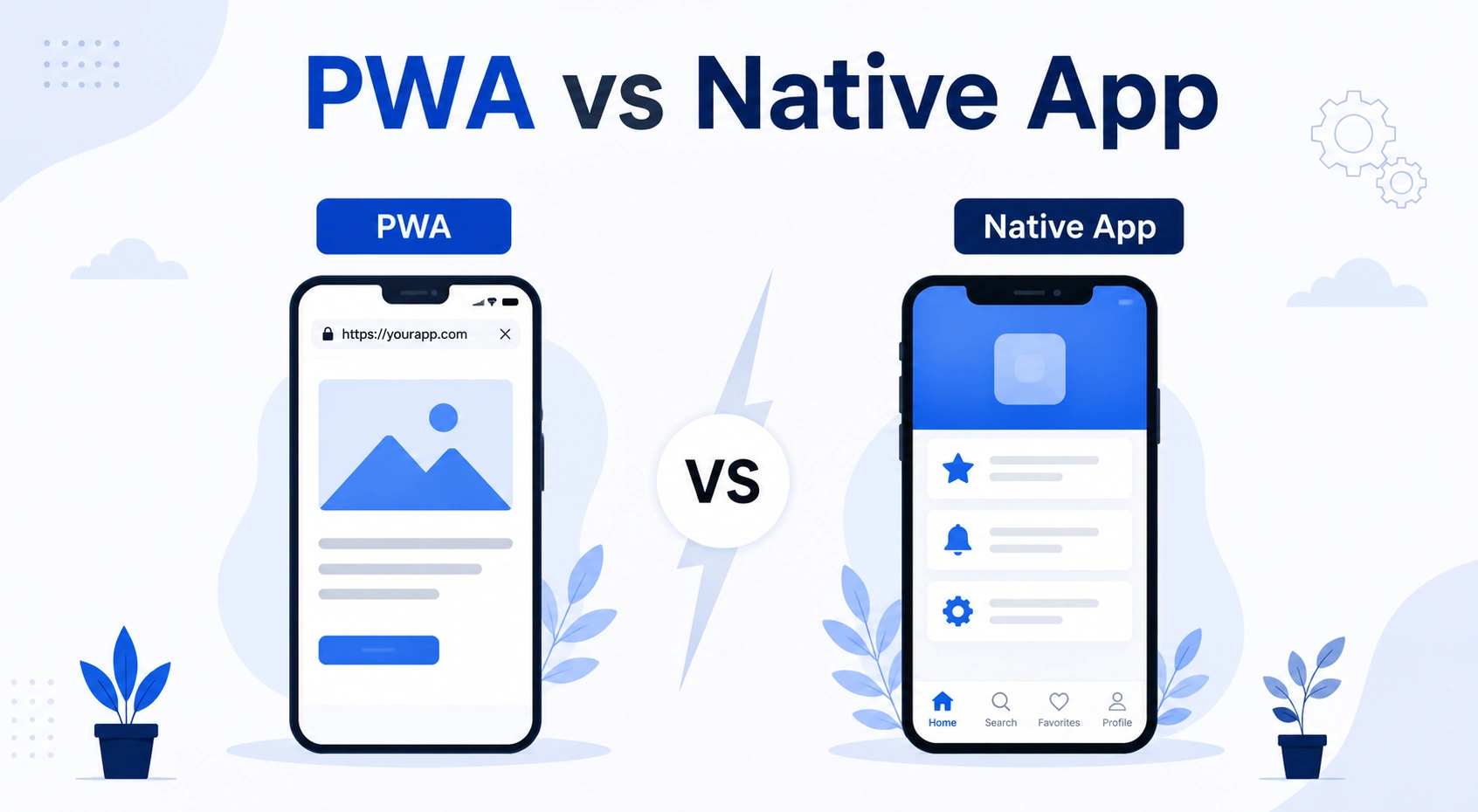
A progressive web app is a specific kind of web application development built with standard web technology that adds app-like behavior through service workers, offline caching, and a home screen icon. It runs inside a browser engine, so one build works across Android, iOS, and desktop without separate codebases. Users can open it directly from a shared link, with no install step required before first use.
A native app is built in the specific language of its platform, such as Kotlin for Android or Swift for iOS, and is distributed through the app store for that platform. This gives it full access to device hardware and the performance ceiling of the operating system itself, at the cost of maintaining a separate build for each platform. Every update also passes through app store review before it reaches users.
The PWA vs native app choice is rarely permanent. Many products start on one path and add the other once specific needs, such as hardware access or app store visibility, become clear enough to justify the investment.
Apple’s Safari has expanded PWA support over the past few years, but real gaps remain that matter for planning. These limits are specific to iOS rather than PWAs generally, since Android’s browser support is more complete, and they are worth checking against your specific feature list before committing to either path.
None of these gaps rule out a PWA outright. They matter most for products that depend heavily on background data sync or hardware connections on iOS specifically.
Budgets and timelines shift significantly depending on whether you build one shared codebase or separate native platforms, and this gap is usually the deciding factor in the PWA vs native app decision for early-stage products. Working with a custom software development services partner early helps translate these ranges into a realistic estimate for your specific scope.
| Factor | PWA | Native (single platform) | Native (iOS + Android) |
|---|---|---|---|
| Typical build cost | ₹4L to ₹12L | ₹15L to ₹40L | ₹25L to ₹70L |
| Typical timeline | 4 to 8 weeks | 3 to 5 months | 5 to 8 months |
| Annual maintenance | Around 15% of build cost | Around 20% of build cost | Around 20% to 25% of build cost |
India’s internet base is overwhelmingly wireless, with wireless connections accounting for the vast majority of internet subscribers compared to wired access nationally. A PWA’s single, browser-based build reaches that base directly without the added cost of maintaining separate native codebases for each platform.
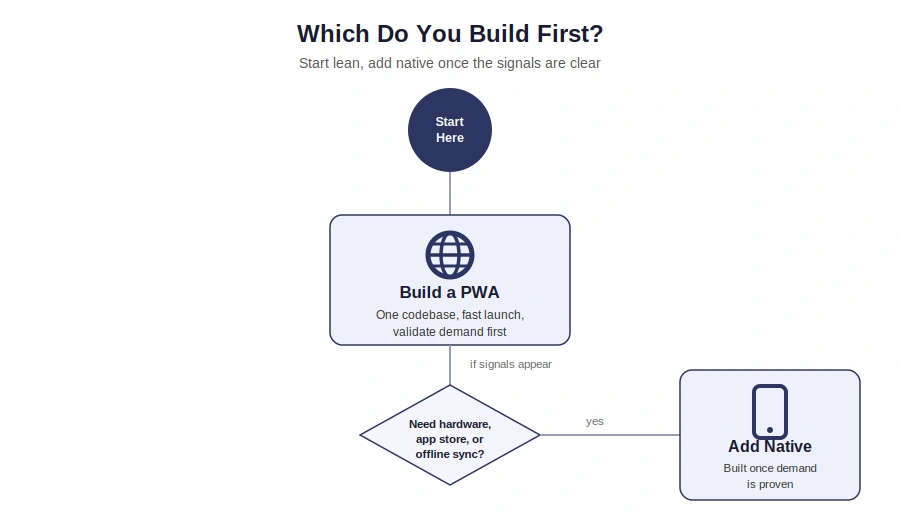
Once the product proves it needs hardware access, deeper offline support, or app store presence to grow further, native development becomes a justified next investment rather than a guess made before launch. This staged approach reduces the risk of overbuilding for a product that has not yet found its audience, and it also means the native build can be scoped around real usage patterns instead of assumptions made at day one. Planning this path with a custom software development company in Bangalore early on makes the eventual transition to native smoother, since the PWA’s architecture can be built with that future migration in mind from the start.
Let Zethic help you build smarter Not just faster
Ram brings deep expertise in product strategy and system architecture across fintech, SaaS, and AI platforms. He specializes in pre-execution planning to help teams build scalable technology foundations and avoid costly rebuilds.

Adding {{itemName}} to cart
Added {{itemName}} to cart