


Start Your Project Today
Tell us about your project — we’ll get back within 24 hours

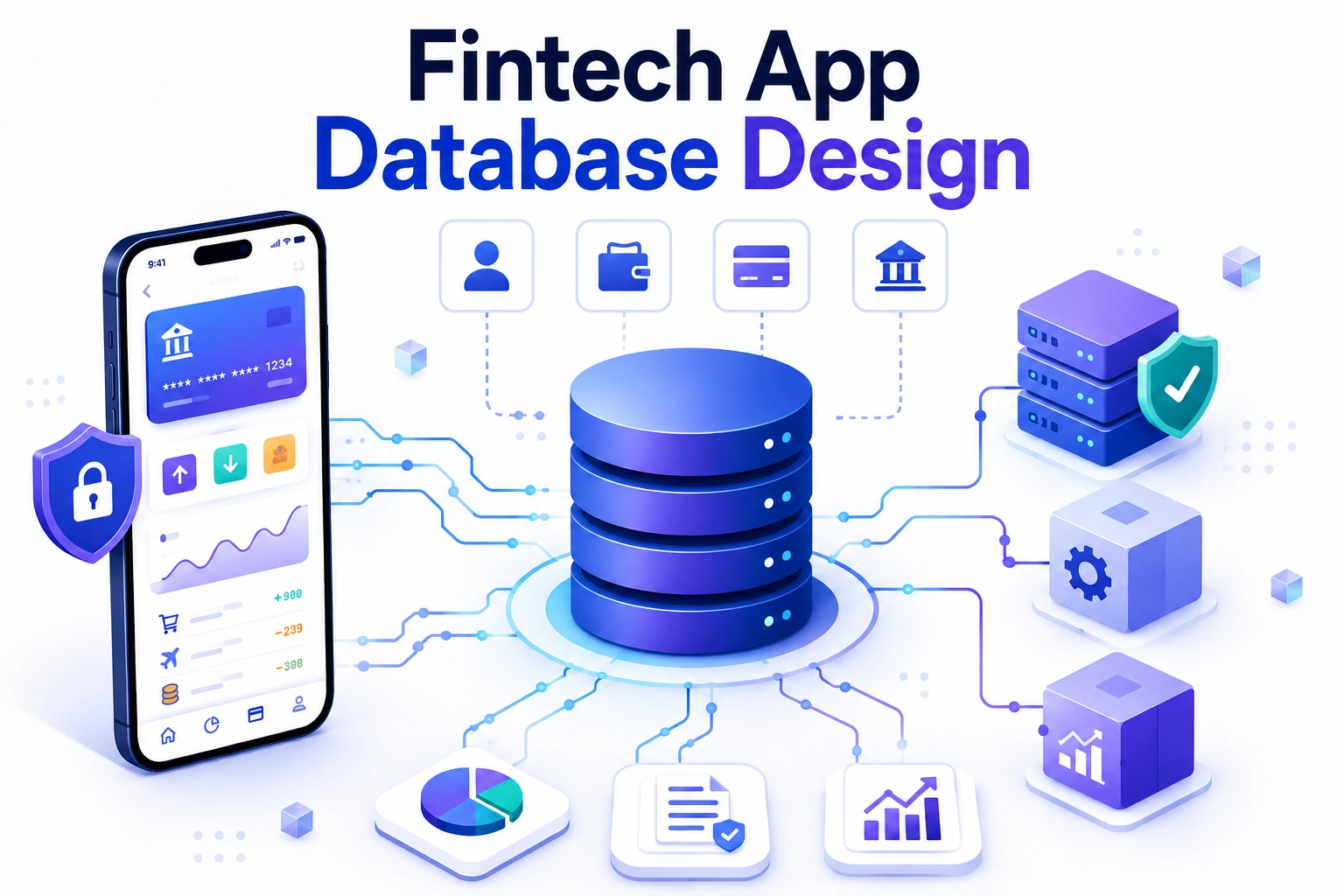
Fintech app database design is the set of decisions that shape how financial data is stored, updated, queried, and audited. Get those decisions right at the architecture stage, and the system handles regulatory scrutiny and transaction volume without rework. Get them wrong, and the problems accumulate until an audit or a scale event makes them expensive to fix.
Most explanations of this topic jump straight to recommending a database engine and skip the harder question: what should the schema, transaction model, and audit architecture actually look like? Most fintech database guides recommend PostgreSQL and move on; this article covers what the schema, isolation levels, and compliance architecture actually need to look like at scale.
Fintech app database design covers the architecture of the data layer in a financial application: how tables or collections are structured, how transactions are enforced, how history is preserved, and how the system behaves when read and write loads grow. These decisions belong at the architecture stage, since the database layer is what determines whether fintech app scalability holds up as transaction volume grows.
The distinction from general application design matters here. A retail database can overwrite a user’s cart record without consequence. A financial database cannot overwrite a transaction or balance entry without creating a compliance problem, since financial data has structural requirements a general-purpose data model was not built to meet.
Most application databases operate on a simple model: write the current state, overwrite it when it changes. Financial data does not work that way. A transaction record is evidence of what happened, and that evidence must be permanent, timestamped, and verifiable.
Four constraints separate the design of a financial database from a standard one:
The answer depends on which layer you are designing for. Most production fintech apps combine a relational core for transactional integrity with supplementary stores for workloads where speed matters more than strict consistency. The table below maps common choices to India-specific build costs across fintech software development services.
| Database Architecture | Best Fit in a Fintech App | ACID Support | Typical Build Cost (INR) | Timeline |
| Relational only (PostgreSQL) | Core ledger, payments, lending MVP | Full | ₹12,00,000 – ₹25,00,000 | 8–12 weeks |
| Polyglot: relational + document store | KYC-heavy apps, NBFCs, insurtech | Full + partial | ₹25,00,000 – ₹50,00,000 | 12–18 weeks |
| Polyglot: relational + in-memory cache | High-frequency payments, neobanks | Full + cache layer | ₹25,00,000 – ₹45,00,000 | 10–16 weeks |
| Event-sourced + CQRS architecture | Core banking, multi-product fintech | Full | ₹50,00,000 – ₹1,00,00,000+ | 18–28 weeks |
The relational layer handles the system of record for most fintech products because it enforces the consistency and referential integrity that financial data requires. Nothing that passes through the in-memory cache should be the only copy of a transaction, and fintech software development in Bangalore teams treat this compliance boundary between the speed layer and the store of record as a structural decision from day one.
The database engine is a foundation, but the schema and transaction patterns built on it determine whether the system stays correct as volume grows. A well-designed schema on a relational database outperforms a poorly structured one on a faster platform.
Five patterns that define whether a financial database holds its accuracy at scale:
Indian regulators treat the database as compliance infrastructure, not a back-office concern. RBI directives and the DPDP Act translate directly into database design constraints built in at the architecture stage.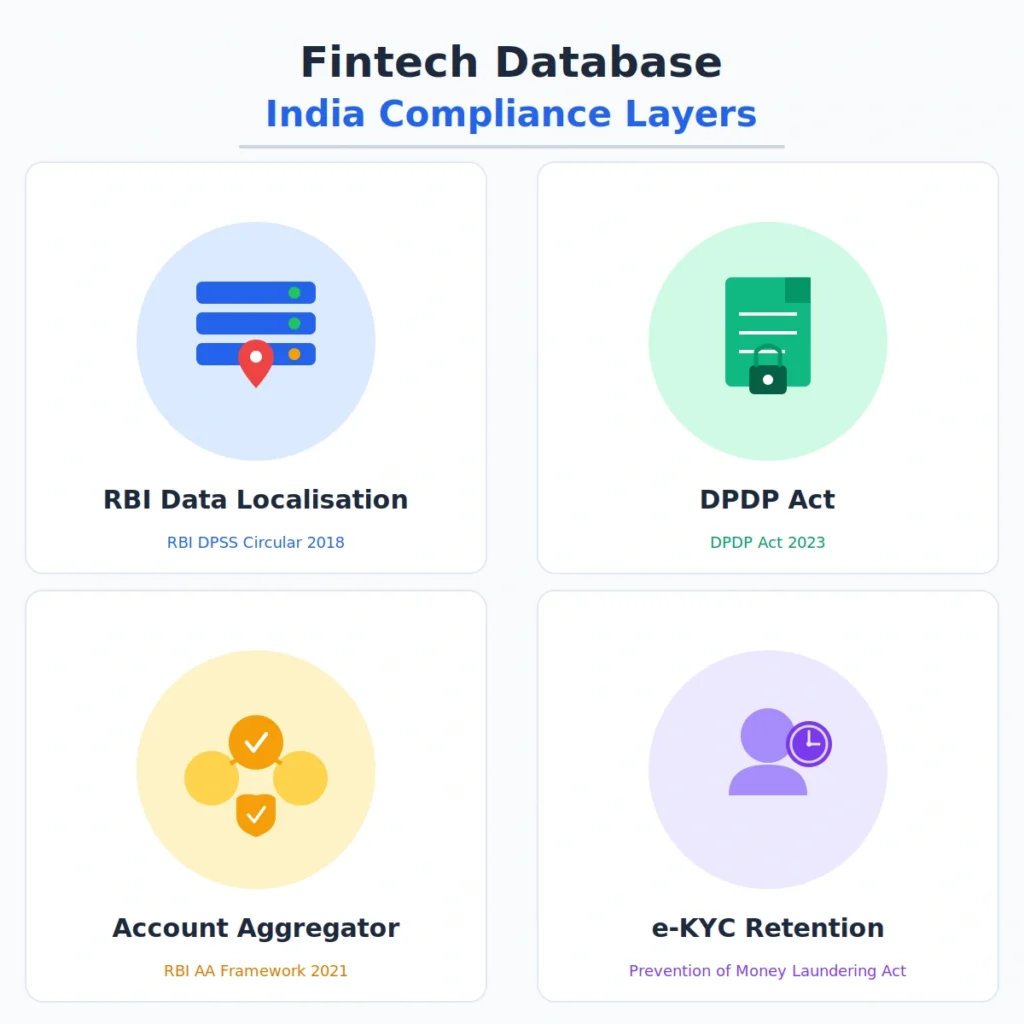
The decisions that determine how a financial database holds up at scale belong at the architecture phase. Schema choices, isolation levels, and audit structure are not easily changed once live data has accumulated.
Zethic designs and builds fintech app databases with the schema, compliance architecture, and transaction patterns scoped before development begins, treating the data model as the foundation everything else gets built on. That approach is why teams building payments platforms, neobanks, and lending products come to Zethic before writing any code.
Ram brings deep expertise in product strategy and system architecture across fintech, SaaS, and AI platforms. He specializes in pre-execution planning to help teams build scalable technology foundations and avoid costly rebuilds.
