


Start Your Project Today
Tell us about your project — we’ll get back within 24 hours

Founder
Flutter App Development

Putting out an app is not just about making features. The hard part starts after launch. Speed, fixes, user feedback, and replies decide if the app lives or dies.
Old ways of building apps are too slow today. That’s why companies pick Agile app development. It makes the go-to-market strategy stronger. For startups or big brands, Agile gives fast launch, quick lessons, and more users.
In this blog, we will clearly explain:
Why are businesses preferring the Agile model?
Agile app development means working in small steps. Instead of building a perfect product, launch a working version first, then learn from real users.
An experienced mobile application developer in the Agile model:
This way makes mobile app development flexible. Changes are welcome, not put off.

Go-to-market isn’t just about marketing. Product readiness, stability, and user experience are equally important.
With Agile development:
That’s why many mobile software development companies integrate Agile with GTM planning.
In traditional development, developers work for months without real feedback. The scenario is different with Agile.
Mobile application developers in the Agile process:
This quickly achieves product-market fit, which is core to the GTM strategy.
In Agile, a mobile application developer is not just a coder. They understand both the business and the user.
A developer in the Agile process:
This is why strong Agile teams perform better in the market.
In the traditional model, everything is built first, then launched. If the market response is negative, changes become costly.
In the Agile mobile application and development approach:
That’s why both startups and enterprises are making Agile a part of their go-to-market planning
Both time and money are important for businesses. The Agile model saves both.
Benefits of Agile mobile app development:
For this reason, every modern mobile software development company follows the Agile methodology.
Agile isn’t just for development; it’s equally important for design.
In an Agile environment, a web designer:
When design and development go hand in hand in Agile, a GTM strategy is stronger.
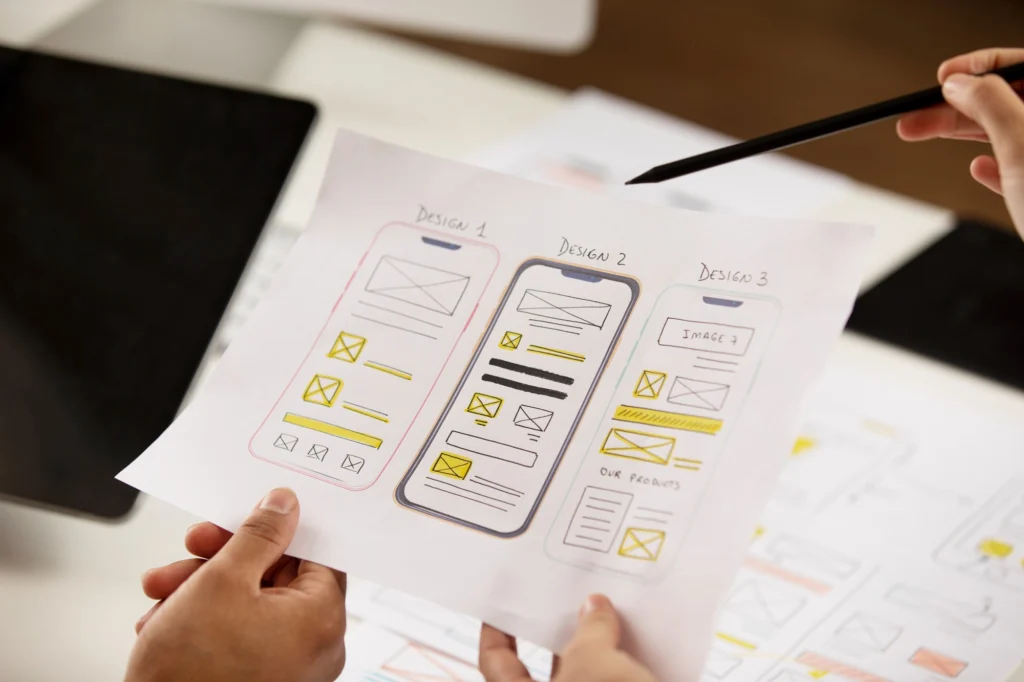
The most valuable thing after market launch is feedback. Agile makes the feedback loop faster.
In the Agile process:
This approach allows mobile application developers to make decisions based on real data.
Every company claims Agile, but not everyone’s execution is strong.
A reliable mobile software development company:
With such a team, an Agile go-to-market strategy yields real results.
Agile doesn’t mean chaos. Some mistakes businesses make.
Common issues:
Experienced mobile application developers have avoided these problems before.
Agile app development isn’t just a development style. It’s a mindset that allows the product to grow with the market.
In today’s competitive landscape:
A good go-to-market strategy works best when mobile app development uses Agile methods.
If you want your product fast, stable, and ready for users, skipping the Agile model costs a lot.
Let Zethic help you build smarter Not just faster
In an Agile approach, mobile app development occurs in small releases. This allows for quick market testing, feedback, and a more realistic go-to-market strategy.
Absolutely not. Nowadays, enterprises are also adopting Agile. Experienced mobile software development companies use Agile to reduce risk and ensure flexible launches.
In Agile, a mobile application developer doesn’t just write code. They understand feature priorities, listen to user feedback, and shape the product according to the market.
Web designers make rapid UI changes based on user behavior. When design and development go hand in hand, both conversion and adoption improve.
In the traditional model, everything is tested at the end. Agile mobile application development allows for early launch, issues are caught early, and costs are controlled.
If the team is providing regular updates, sprint planning is clear, and changes are being handled easily, then you understand that Agile is being implemented correctly.
In the Agile model, there is no excessive investment in the wrong feature. Market feedback is received quickly, so the risk of GTM failure is significantly reduced.
See if the company is showing real case studies, communication is transparent, and developers understand the business goals. Simply saying “Agile” is not enough.
Ram brings deep expertise in product strategy and system architecture across fintech, SaaS, and AI platforms. He specializes in pre-execution planning to help teams build scalable technology foundations and avoid costly rebuilds.

Adding {{itemName}} to cart
Added {{itemName}} to cart