


Start Your Project Today
Tell us about your project — we’ll get back within 24 hours

Founder
User Interface Design
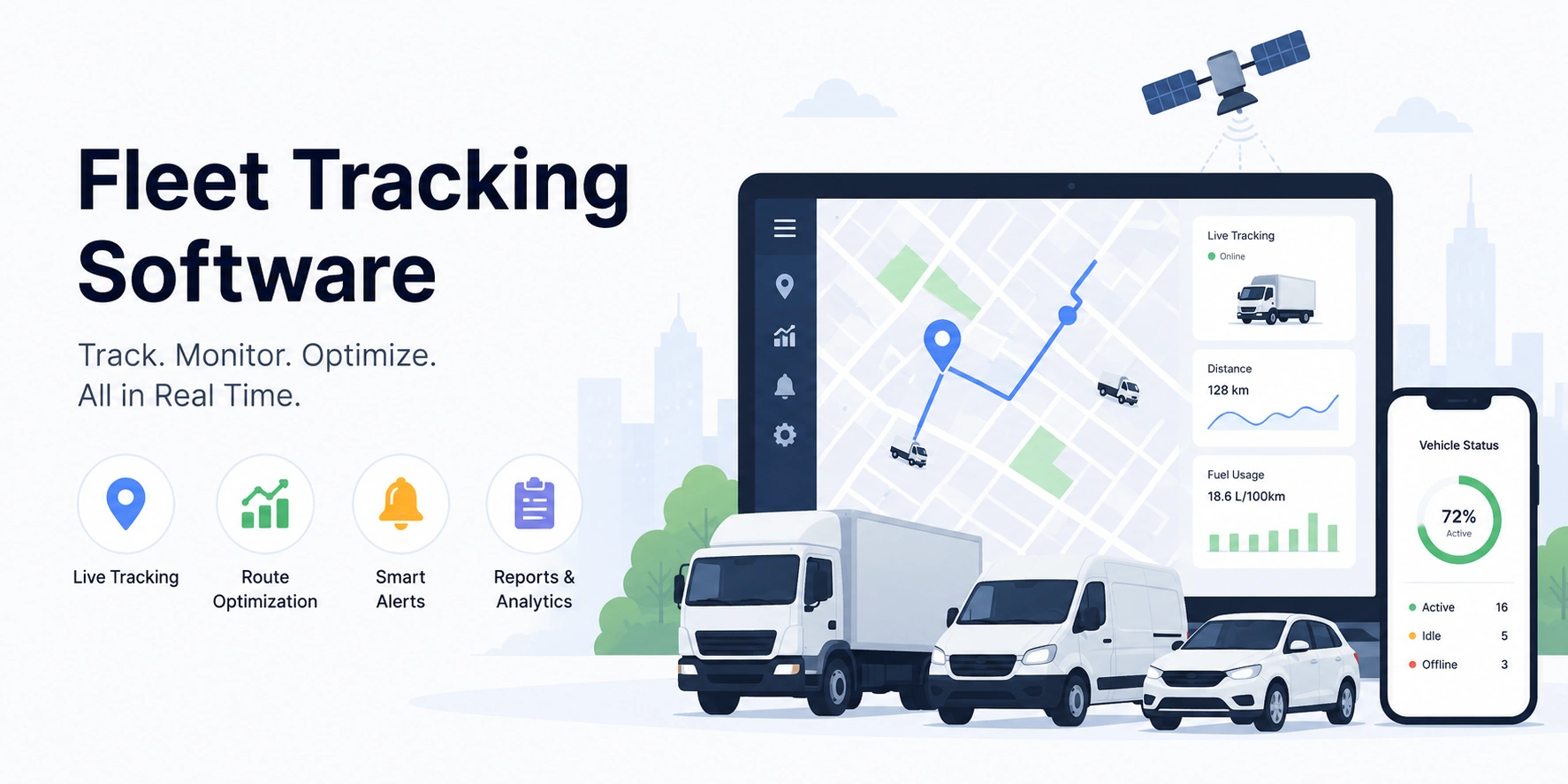
Fleet tracking software is a system that uses GPS devices installed in vehicles to report location, movement, and vehicle health data back to a central dashboard. Dispatchers and fleet managers use this data to see where vehicles are in real time, review past routes, and monitor driver behavior.
This is narrower than fleet management software, which also covers fuel accounting, maintenance scheduling, and driver payroll. Fleet tracking specifically deals with location and vehicle data, which is why it overlaps with broader logistics app development, since that same location data often needs to feed into dispatch, route planning, and customer-facing systems.
The exact feature set depends on the fleet, but a handful of features show up in nearly every serious platform.
For commercial trucking fleets, compliance features matter just as much as location data. Since December 2017, drivers subject to hours-of-service rules have been required to log those hours through an electronic logging device rather than paper records, a mandate enforced by the Federal Motor Carrier Safety Administration.
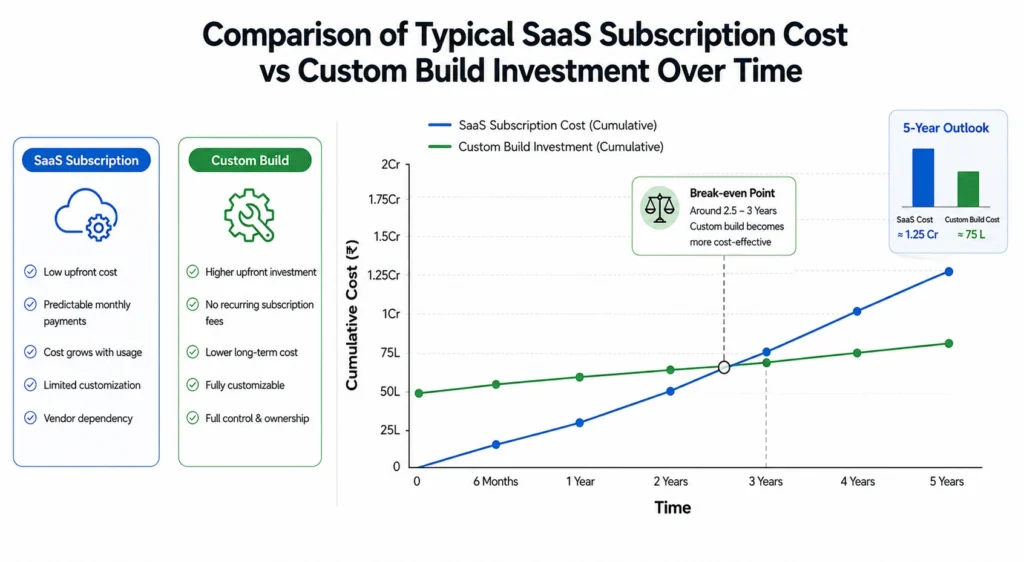
The decision usually comes down to three factors: how standard the fleet’s tracking needs are, how much hardware flexibility matters, and how much ongoing engineering support the business can commit to internally, especially for a quick commerce delivery platform.
| Factor | Buy (SaaS) | Build (Custom) |
|---|---|---|
| Upfront cost | Lowest | Higher requires dedicated engineering |
| Hardware | Often bundled with a subscription | Sourced and connected separately |
| Timeline | Days to weeks | 3 to 6 months |
| Control | Limited to the vendor’s dashboard and reports | Full control over data and integrations |
| Ongoing cost | Recurring per-vehicle subscription | Internal maintenance, no per-vehicle fee |
| Best fit | Standard fleets with common vehicle types | Fleets with specialized vehicles or unusual integration needs |
Some businesses land in between, buying a base tracking platform for most of the fleet, then building custom integrations for the vehicles or workflows that don’t fit the standard tiers, the same tradeoff that shows up when comparing logistics app development against in-house teams.
Implementation timelines differ sharply between the two paths.
Testing is the phase most businesses underestimate, particularly regarding GPS accuracy in dense urban areas or in covered facilities where the signal drops. Building in a dedicated testing phase from the start, using the same discipline used when building an intuitive logistics app, helps confirm the data holds up before dispatchers begin relying on it day-to-day.
India’s logistics costs sit at 7.97% of GDP, the headline number from a joint assessment of logistics costs commissioned by the country’s industry ministry, a sharp drop from the 13 to 14% figures long assumed to represent the country’s overhead. That shift reflects broader gains in digital infrastructure and software talent, both of which matter directly for fleet tracking software specifically.
Development teams based in India commonly work on GPS integration, telematics, and dispatch systems for logistics companies abroad, which lowers the real cost of building custom fleet tracking software compared to hiring teams in markets where hourly rates run several times higher. Hardware sourcing still needs to account for import duties and device certification specific to the fleet’s home country, regardless of where the software itself gets built.
The throughline across features, cost, and timeline comes down to fit: fleet tracking software only pays for itself when it matches the fleet’s actual vehicle mix, hardware needs, and integration requirements, not a generic per-vehicle SaaS tier built for the average fleet. That fit matters more than whether the software gets bought or built.
This is the kind of scoping Zethic works through directly with businesses running specialized or growing fleets, from hardware selection through custom dashboards tied to existing dispatch and maintenance systems. as part of our broader logistics software development work. Whether the right starting point is a lean build or a hybrid setup layered on an existing SaaS platform depends on the same cost, hardware, and timeline questions this article has walked through.
Let Zethic help you build smarter Not just faster
Ram brings deep expertise in product strategy and system architecture across fintech, SaaS, and AI platforms. He specializes in pre-execution planning to help teams build scalable technology foundations and avoid costly rebuilds.

Adding {{itemName}} to cart
Added {{itemName}} to cart