
Paywize
India's smartest collection & payout platform
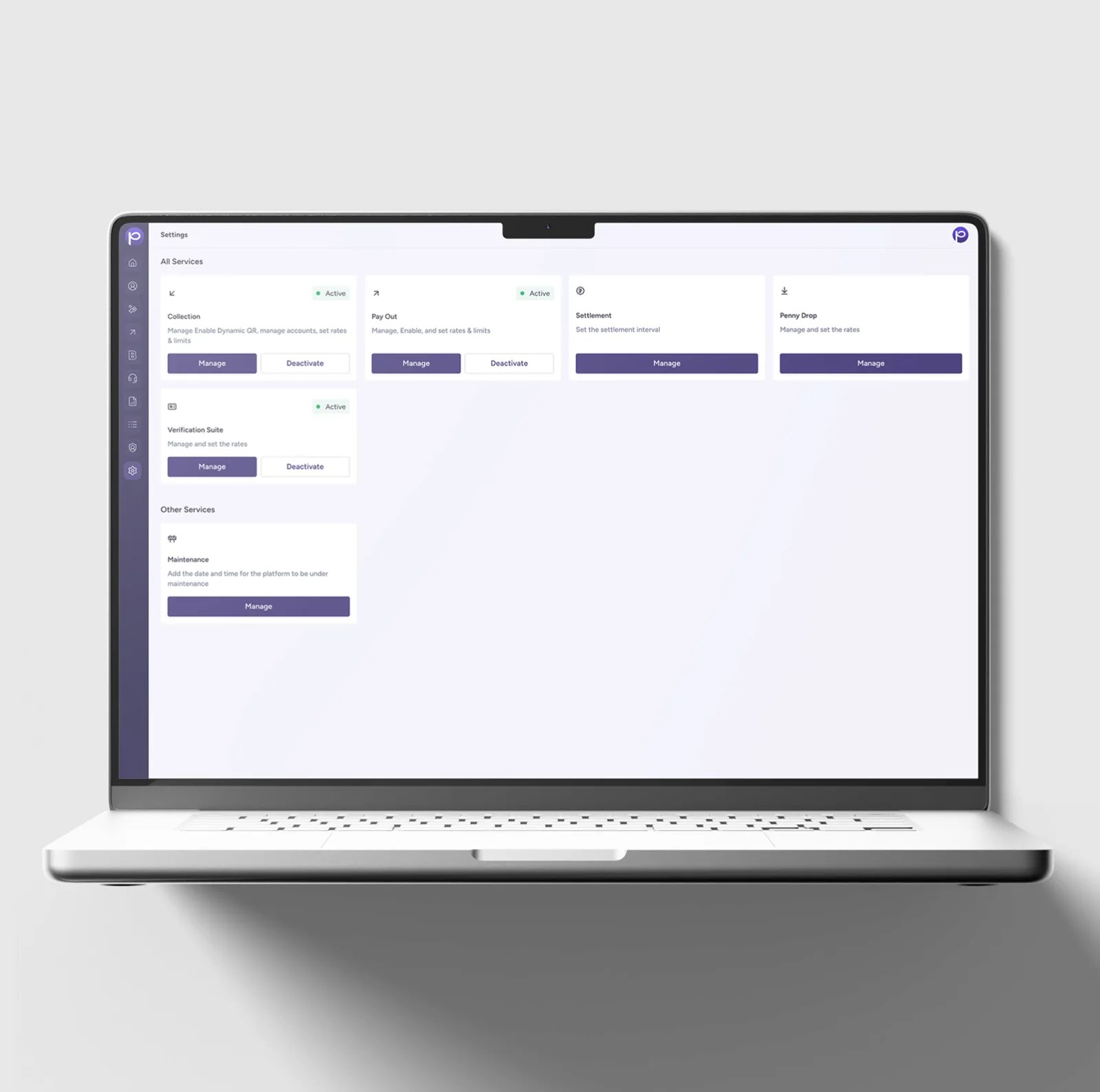
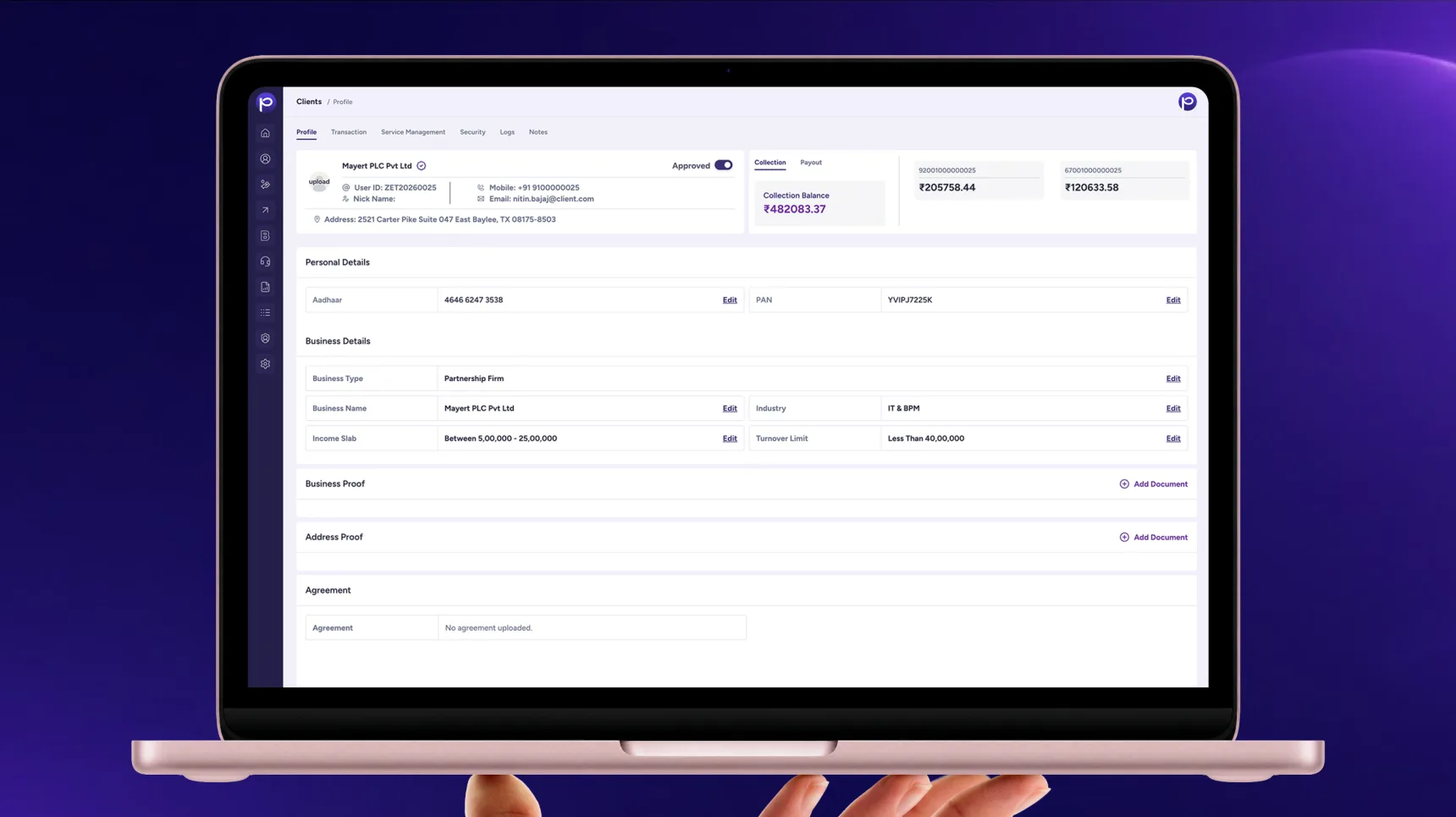
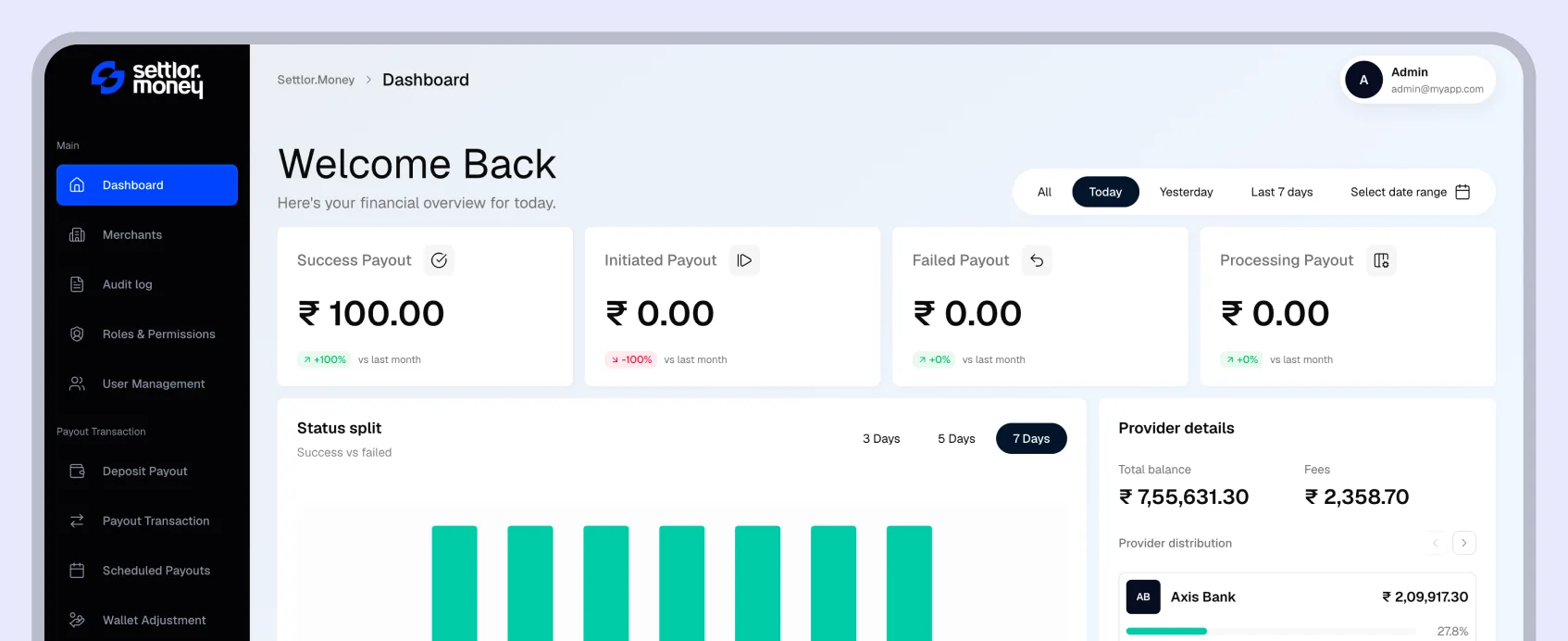
We helped Paywize replace manual payment tasks with one platform, including UPI collections, multi-wallet payouts, and dashboards for real transaction volume.
Talk to our team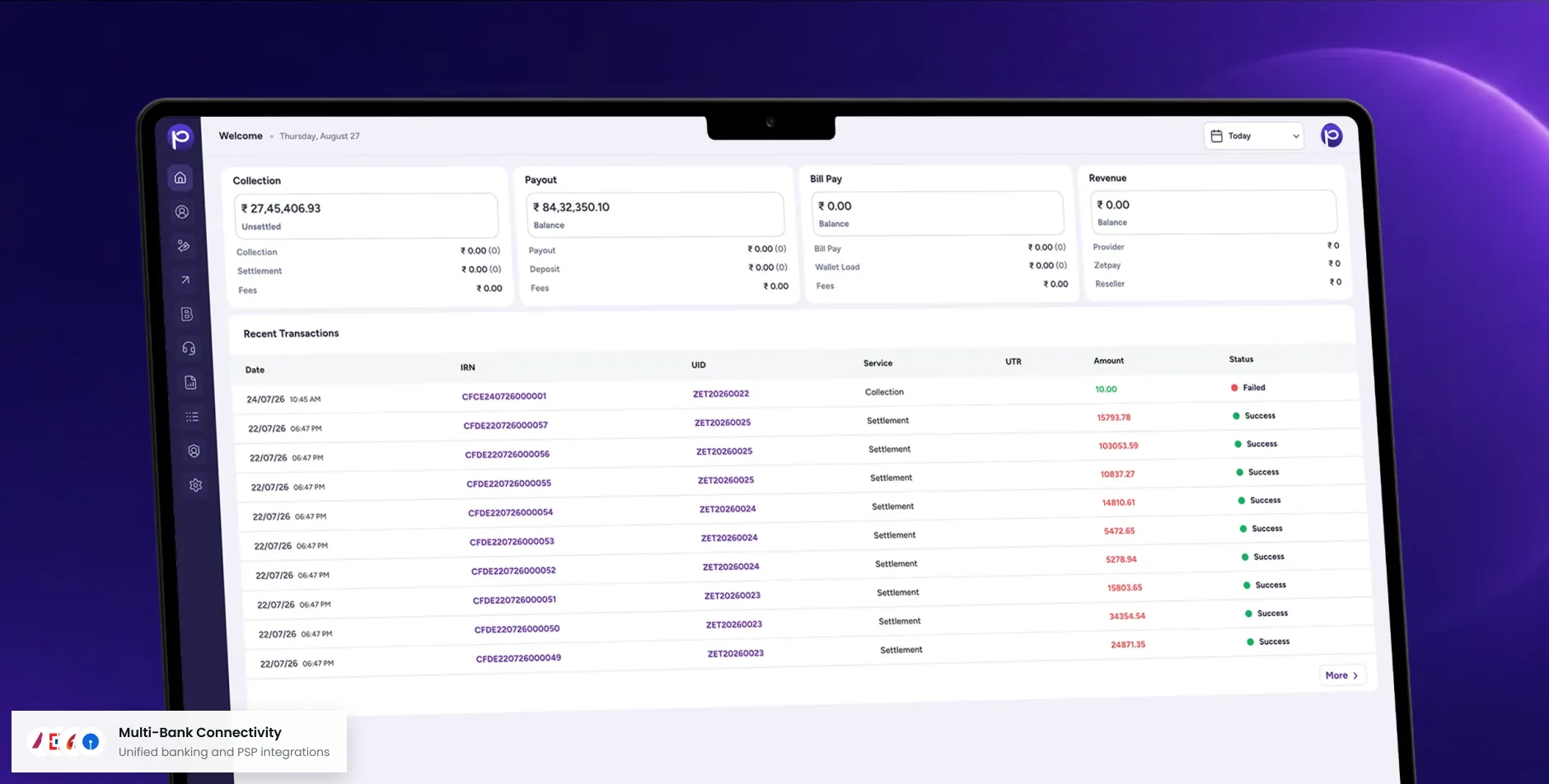

Scope of work
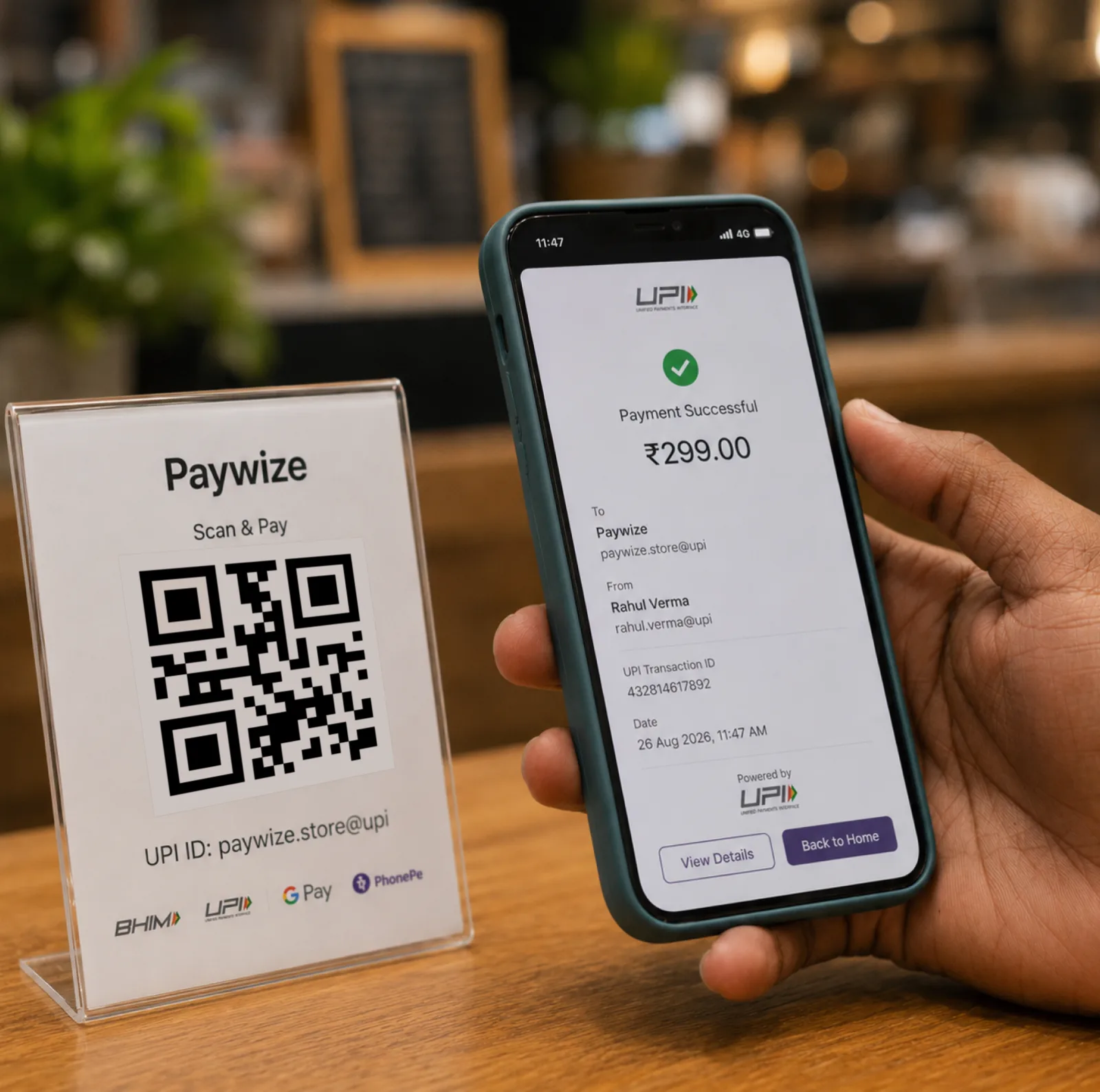
UPI payment collections
Accepts payments via UPI Collect, Intent, and dynamic QR codes for fast, frictionless customer transactions.
Multi-mode payouts (IMPS/NEFT/RTGS)
Routes disbursements through IMPS, NEFT, or RTGS with smart routing to minimize failures and speed up settlement.
Multi-wallet ledger system
Keeps separate settlement and payout balances per merchant, with every movement recorded as a traceable ledger entry.
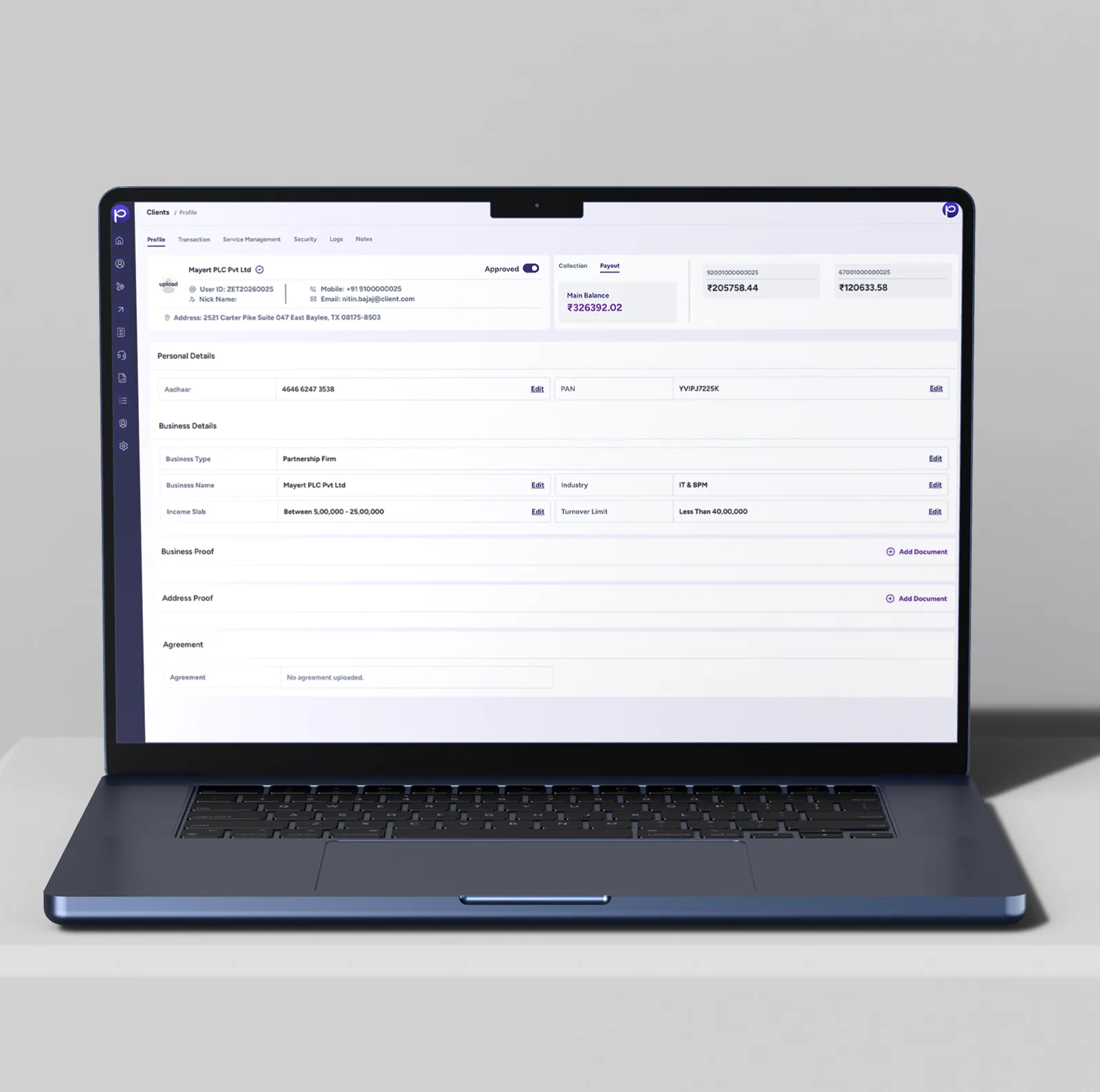
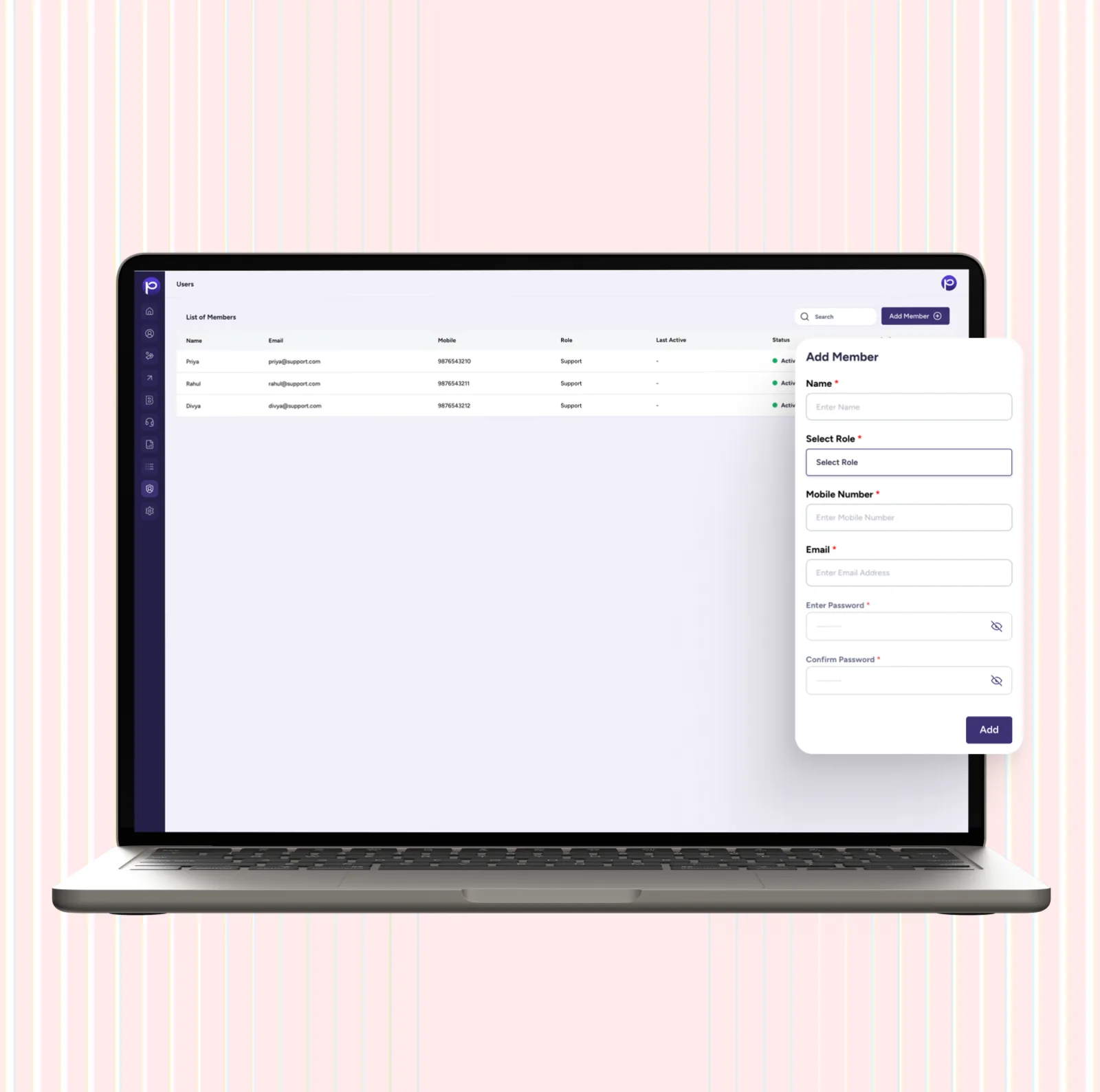
Role-based access control
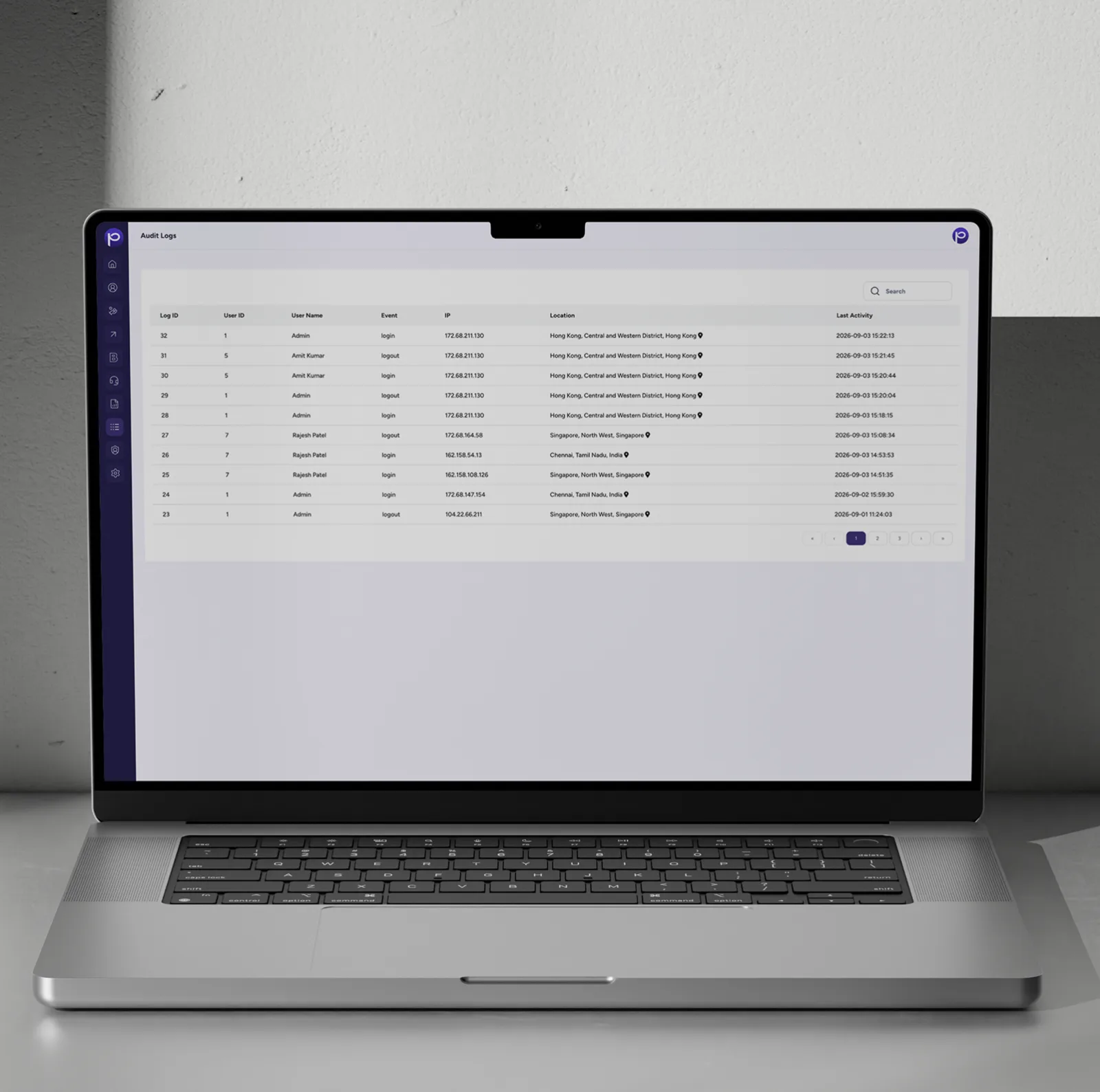
Admin, finance, support, and merchant roles with granular permissions and audit logging across the platform.
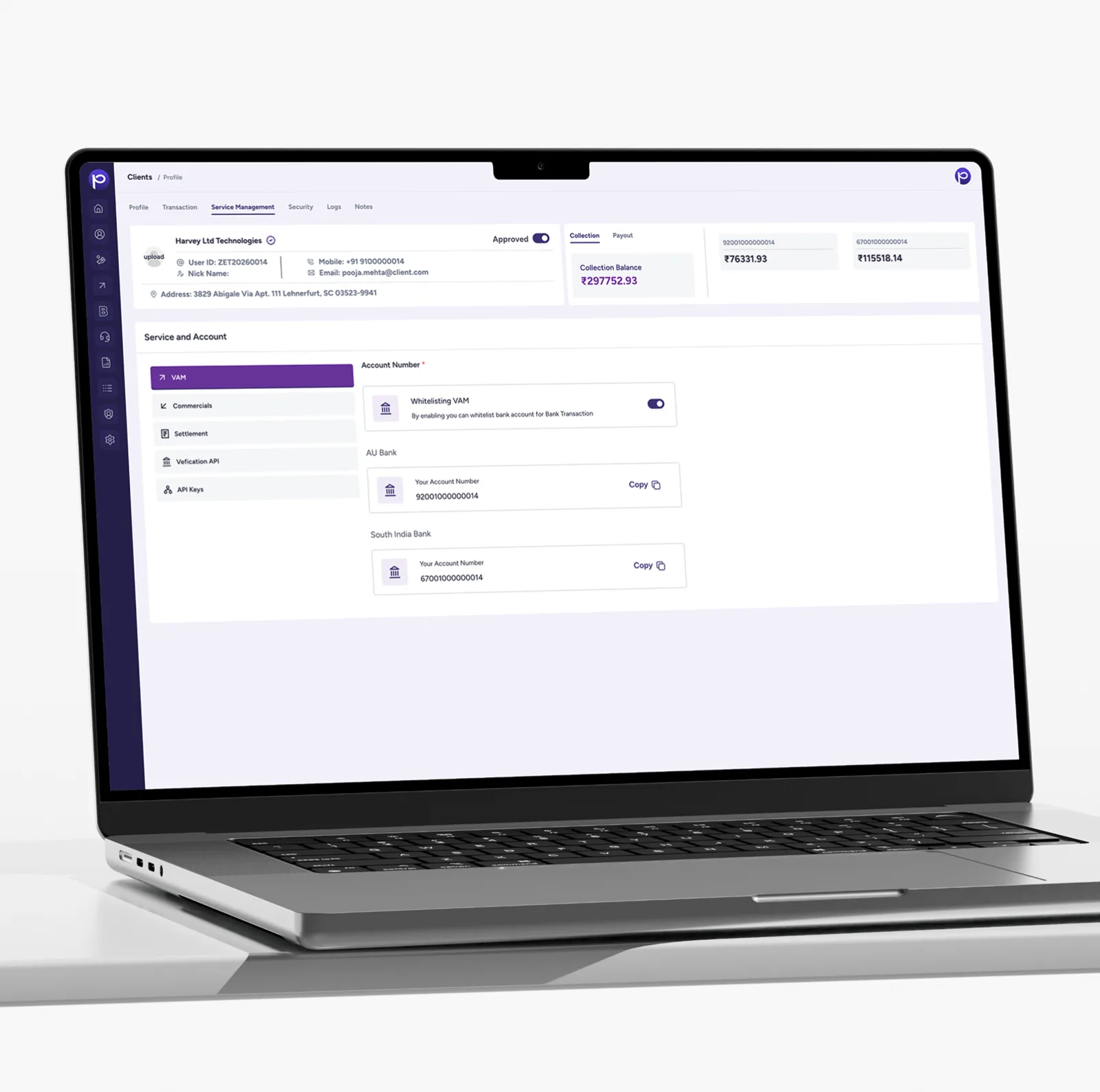
Virtual account management
Issues and manages virtual accounts so incoming funds are attributed to the right merchant automatically.
Bank & PSP integration
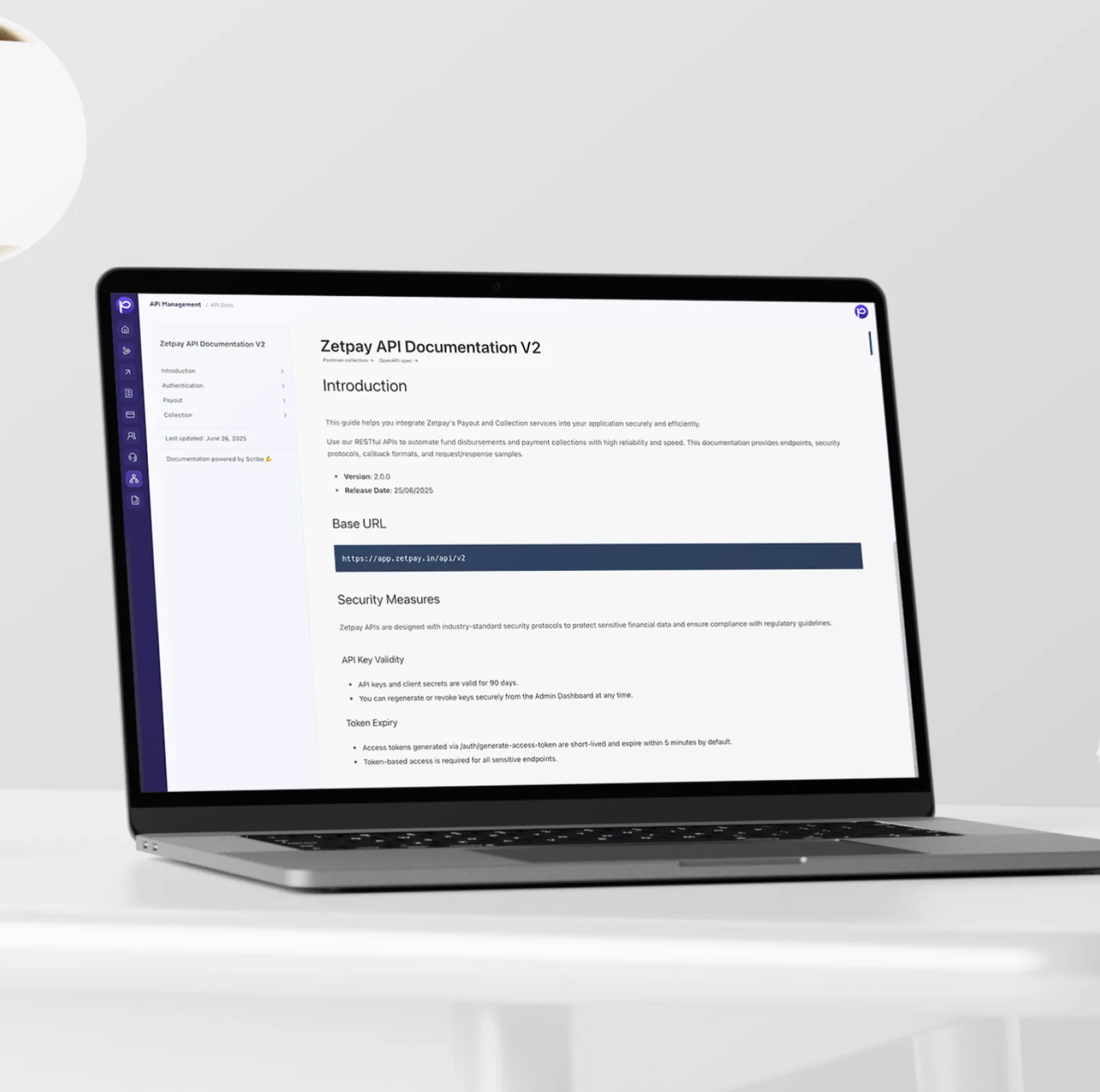
A reusable integration layer for banks and payment service providers, so new rails are configuration rather than rework.
QA & ongoing support
Regression suites, monitoring, and a support rota that keeps payouts moving after launch.
We turn ideas into digital products, crafting engaging experiences.
Talk to our teamPayment Infrastructure Built for Scale
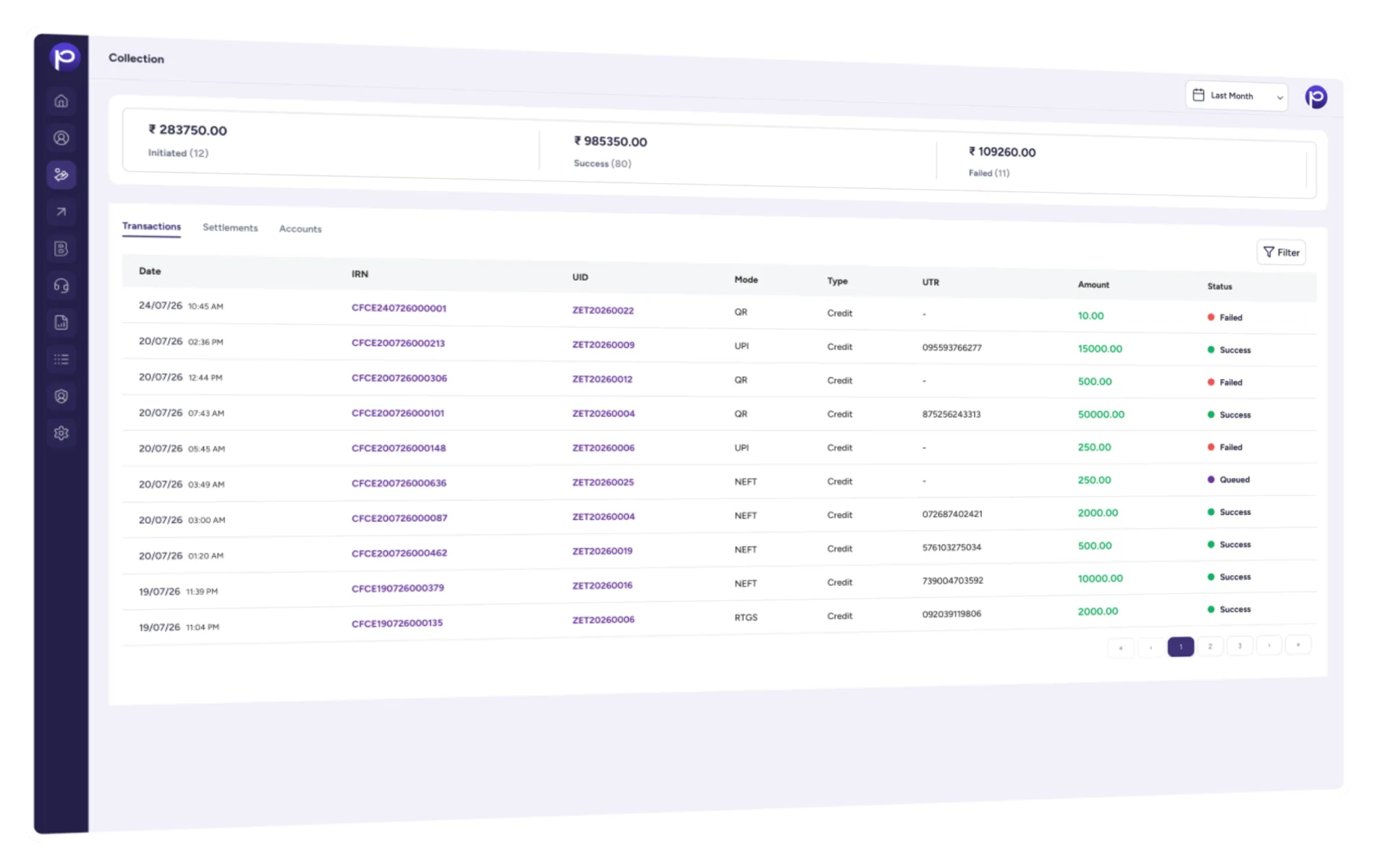
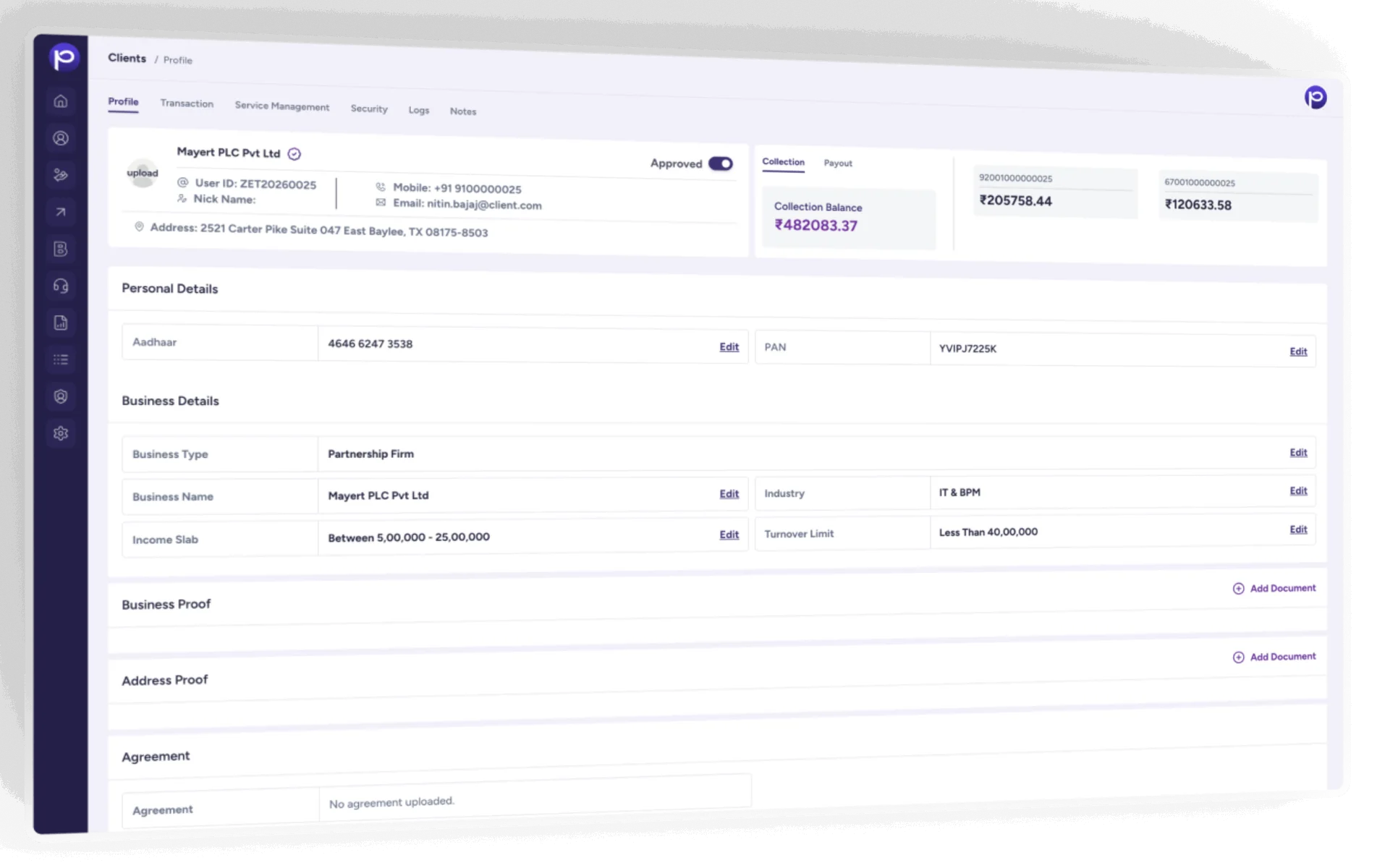
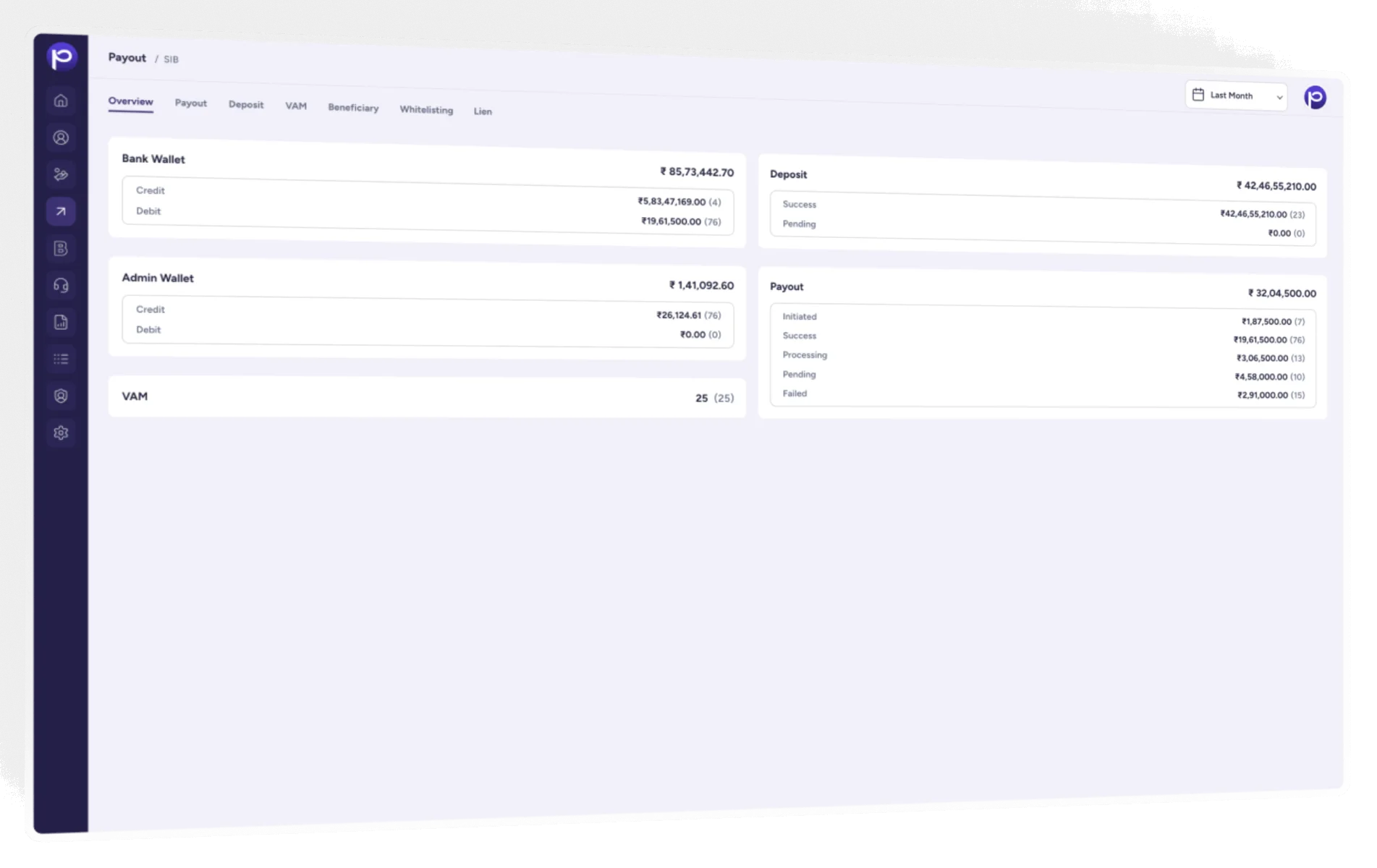
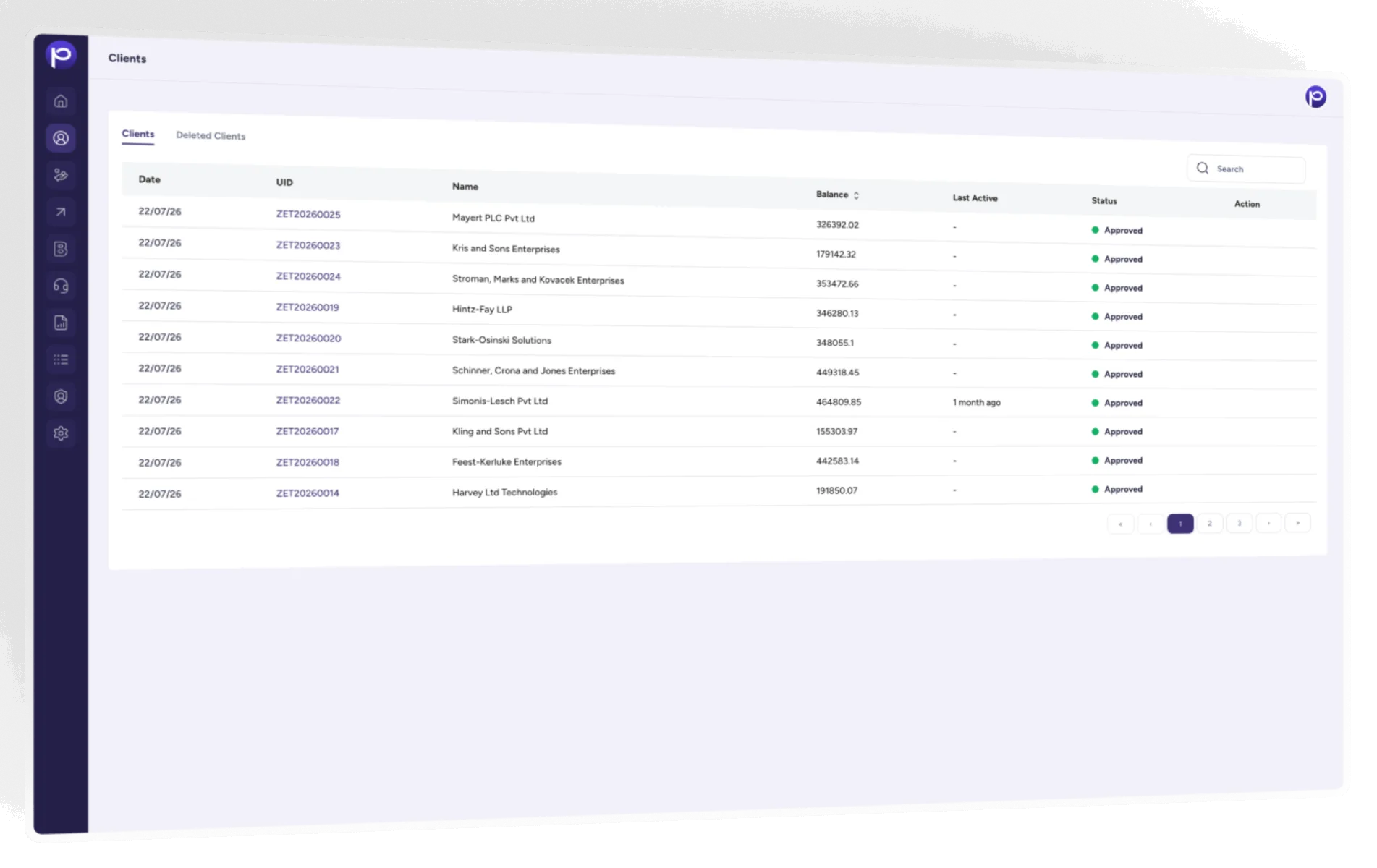
The challenge
Manual operations that couldn't keep pace with growth Intro: Before Zethic, Paywise ran collections, payouts, and merchant onboarding by hand across disconnected tools. As volume grew, payouts slowed down, support tickets piled up, and reconciliation ate into the team's week.
- { 01 }
No unified view of money movement Merchants and admins had no single dashboard for wallet balances, transaction history, or settlement status
- { 02 }
Manual, error-prone payouts Disbursements were triggered and tracked by hand. No structured queue, no audit trail, no check against insufficient balances.
- { 03 }
Flat access control Every admin and merchant sat at the same permission level. A compliance risk as the team grew.
- { 04 }
Fragile bank and PSP connections Integrations were built ad hoc. Adding a new bank or payment mode meant rework, not configuration.
Building the core for every payment flow
We mapped the full journey across collections, settlements, payouts, and reconciliation, then designed the ledger, wallet, permissions, and integration layers around it. This gave Paywize a stronger foundation for adding new banks, PSPs, payment modes, and merchants without reworking the core.
- Payment flow audited end to end { 01 }
Map Transaction Flows
Mapped collections, settlements, payouts, refunds, and merchant flows to identify system gaps and dependencies.
- Ledger settlement vs payout { 02 }
Design the Ledger Model
Structured separate settlement and payout balances with clear transaction states and fund traceability.
- Access control roles & permissions { 03 }
Implement Role-Based Access
Defined role-based permissions for admin, finance, support, and merchant users with audit logging.
- Integrations shipped in phases { 04 }
Standardize Bank Integrations
Built a reusable integration layer for banks and PSPs, making new payment connections easier to onboard.
What shipped, and how it held up
- 5000 TPS
Handles 5000 transactions per second without performance drops during peak load.
- 99% SLA
Guaranteed platform reliability backed by a contractual 99% uptime commitment.
- ~2 ms
Delivers API responses in under 2 milliseconds for real-time transaction processing.
- 99%+
Automates reconciliation with over 99% accuracy, cutting manual errors and reviews.
Like what you see? Let's build something for your team.
One platform, from first collection to final payout
Building the payment infrastructure in layers
Paywize evolved through multiple product phases, starting with core transaction processing and expanding into collections, virtual accounts, multi-wallet management, bulk payments, and multi-bank connectivity. Each phase strengthened the platform's transaction control, scalability, security, and operational visibility.
- Design
- Development
- Testing
| Phase & Deliverable | Year 1 | Year 2 | ||||||
|---|---|---|---|---|---|---|---|---|
| Q1 | Q2 | Q3 | Q4 | Q1 | Q2 | Q3 | Q4 | |
| Phase 1 Transaction Core Payout engine and transaction controls | | |||||||
| Phase 2 Collections & VPA UPI collections and virtual accounts | | |||||||
| Phase 3 Wallet Orchestration Multi-wallet ledger and bulk payments | | |||||||
| Phase 4 Banking Network Multi-bank and PSP integrations | | |||||||
| Phase 5 Scale & Security Reconciliation, monitoring and PCI DSS-aligned controls | | |||||||
-
 React
React -
 TypeScript
 -
 Node.js
 -
 Redis
Redis
-
 GoLang
 -
 PostgreSQL
 -
 Docker
 -
 Kafka
Kafka
A modern, micro services stack
React and Go microservices — typed end-to-end, containerised with Docker and deployed on Kubernetes.
Start a conversationThe people behind the build
Thirteen specialists across seven roles from architecture and design to full-stack engineering and QA, in one integrated squad.
- Full-Stack DevFeature delivery
- Product QA EngineerQuality assurance
- Product ArchitectCore & technical direction
- Senior DeveloperCore engineering
- Project ManagerPlanning & delivery
- Team LeadEngineering lead
- UI / UX DesignProduct design
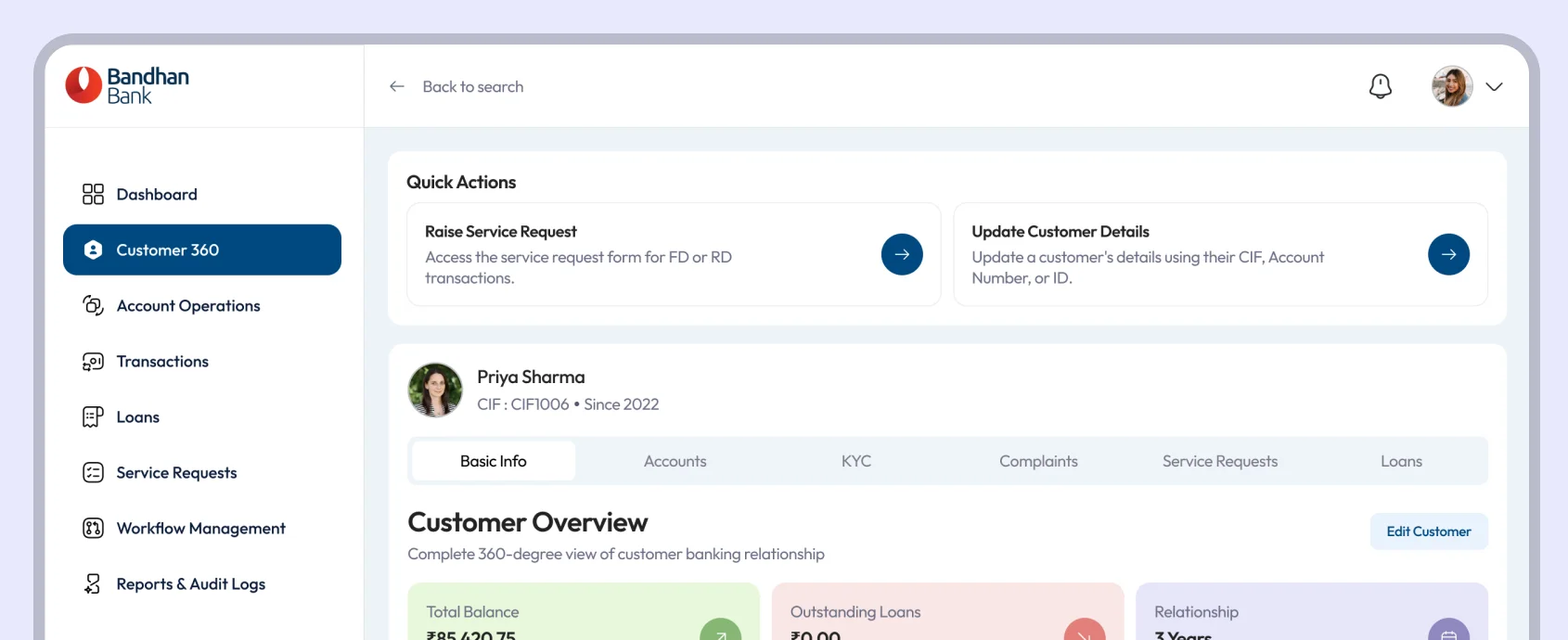

Have a product to rebuild, ship, or scale?
Tell us where you are — pre-discovery, mid-build, or scaling. A senior engineer or designer will reply within one working day. No SDR, no slideware.







Share your context
Idea stage, mid-build, or scaling — tell us where you are. We sign an NDA before any specifics.
Speak to a senior
A senior engineer or designer joins the call within two working days to map your goals and constraints.
Get a real plan
A scope, an engagement model, and a delivery timeline tailored to your stage. No slideware.
Have a product to rebuild, ship, or scale?
Tell us where you are — pre-discovery, mid-build, or scaling. A senior engineer or designer will reply within one working day. No SDR, no slideware.