


Start Your Project Today
Tell us about your project — we’ll get back within 24 hours

Founder
User Interface Design
Banks are spending more on compliance technology than at any point in the past decade. Yet regulators still handed out billions of dollars in fines last year alone. The real question for any bank evaluating a purchase is not whether to invest, but whether the software actually closes the gaps that cause these fines.
Banking compliance software is a system that tracks a bank’s regulatory obligations, checks transactions and processes against those rules, and generates the reports regulators require. It connects to core banking systems, customer databases, and transaction records to flag activity that falls outside approved limits.
Building this kind of system overlaps closely with custom fintech software development, since compliance modules typically sit alongside payment processing and account infrastructure rather than standing on their own. This is why banks often coordinate compliance builds directly with their payment gateway software development services provider, so transaction monitoring rules and payment routing logic are designed against the same data rather than reconciled after the fact. Most platforms also keep a record of every check performed, so a bank can show what it did and when if a regulator asks.
In practice, this covers checks like transaction limits, sanctions and watchlist screening, and reporting deadlines tied to specific regulators. A bank launching a new product, such as instant payments or digital lending, typically needs its compliance software updated at the same time the product goes live, not months afterward.
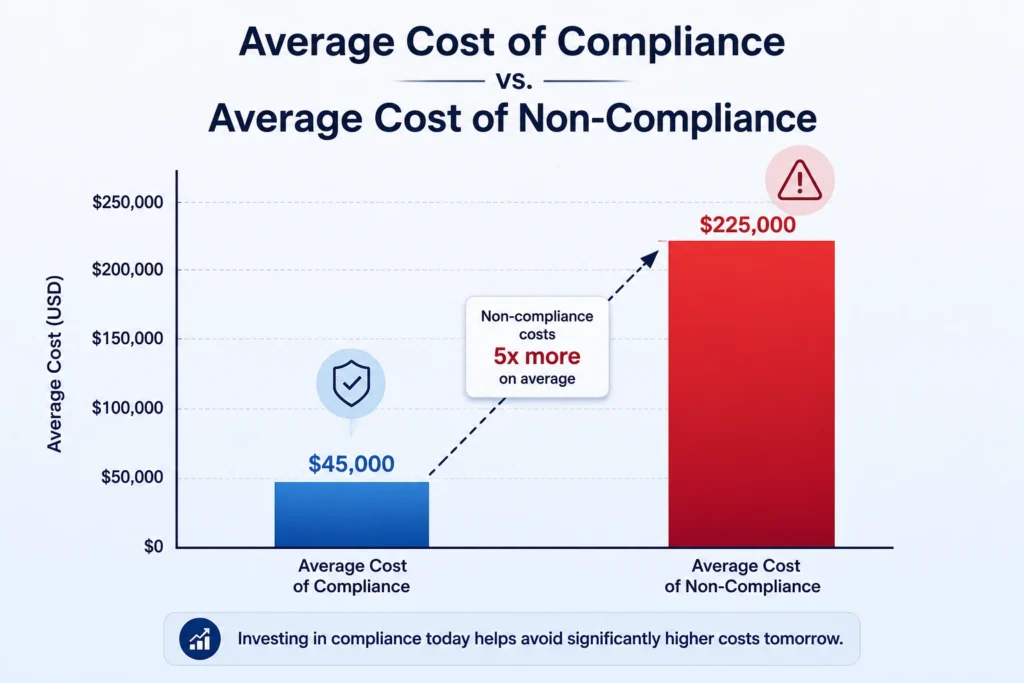
Remediation after a major compliance failure usually involves more than paying the fine itself. Banks often bring in outside consultants, retrain compliance staff, and rebuild transaction monitoring systems that should have caught the problem earlier. Much of this work traces back to compliance software that was never updated to match current regulatory requirements.
These figures point to a pattern: the fine itself is rarely the highest cost. Remediation, monitorships, and lost business tend to add up to far more than the original penalty.
The circular does not name a single vendor or platform. Regulated entities can choose their own policy compliance management software as long as the platform supports task assignment, audit trails, and reporting across departments. Smaller NBFCs are held to the same expectations as large commercial banks, even though their compliance teams are usually much smaller.
For banks operating in India, this means compliance software is no longer optional. It is a direct regulatory expectation with a defined scope.
| Factor | Build | Buy |
|---|---|---|
| Upfront cost | Higher requires a dedicated engineering team | Lower, subscription, or license-based |
| Timeline | 9 to 18 months for a working system | 2 to 6 months to first deployment |
| Control | Full control over logic and integrations | Limited to the vendor’s configuration options |
| Maintenance | Ongoing internal responsibility | Vendor handles regulatory updates |
| Best fit | Large banks with unique core systems | Mid-size banks and NBFCs with standard needs |
Implementation timelines vary by scope, but most projects follow the same sequence.
A mid-size bank can expect a working system in roughly 4 to 6 months, a pace not unlike building a payment gateway in India, where legal review and testing often run in parallel. Larger institutions with multiple legacy systems often take longer, mainly due to integration work rather than the software itself.
Timelines stretch further when a bank operates across multiple states or countries, since each jurisdiction can add its own reporting formats and review cycles. Banks that skip the testing phase to save time often end up doing that work later anyway, once regulators or auditors flag gaps the software should have caught.
The throughline across cost, regulation, and timeline comes down to the same point: compliance software only prevents fines when it stays current with both the rules and the bank’s own systems. That alignment matters more than whether the software was built in-house, bought outright, or stitched together as a hybrid.
This is the kind of work Zethic’s fintech software development in Bangalore team takes on directly with banking and NBFC teams, whether a project starts as a full build or as integration work layered onto a purchased platform. That includes RBI-aligned workflow systems, AML and KYC modules built around fraud detection and transaction security, and reporting tools matched to a bank’s specific regulatory scope- the same gaps this article has walked through from cost to implementation.
Let Zethic help you build smarter Not just faster
An MVP with core routing logic typically takes a few months. Full production systems with multiple integrations and real-time re-routing take longer.
Costs vary widely by scope and deployment model, though broader research on the cost of non-compliance shows subscription-based platforms generally cost less upfront than a fully custom build.
Most modern compliance platforms are designed to connect with core banking, transaction, and customer data systems, though the integration effort depends on how old the existing systems are.
Regulated entities that fail to update their systems risk regulatory scrutiny and potential penalties tied to inadequate compliance monitoring.
Rule sets should update as soon as a regulator issues a change, since a system running on outdated rules still leaves a bank exposed even if the software itself works fine.
Ram brings deep expertise in product strategy and system architecture across fintech, SaaS, and AI platforms. He specializes in pre-execution planning to help teams build scalable technology foundations and avoid costly rebuilds.

Adding {{itemName}} to cart
Added {{itemName}} to cart