

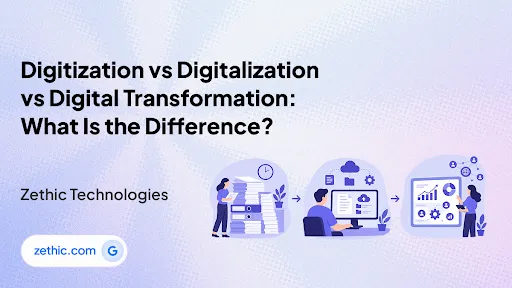
A scanned invoice, an online order portal and a business that sells uptime instead of machines all count as going digital, yet they sit at three very different levels of work. Digitization converts information into digital form, digitalization uses that digital information to change how a process runs, and company-wide digital change reshapes how the whole organization operates around digital tools. Understanding digitization vs digitalization vs digital transformation helps technical teams set the right scope for every project, from a single records cleanup to a multi-year operating model shift.
What Is Digitization?
Digitization is the conversion of analog information into a digital format: the content stays the same while the format changes. A scanned contract, a photographed whiteboard, and an archive of engineering drawings saved as image files are all results of digitization, producing records that can be searched, stored, and shared instead of located in a physical folder.
Common digitization examples include:
- Scanning paper invoices into PDF files
- Entering handwritten maintenance logs into a spreadsheet
- Converting patient charts into electronic health records
- Saving recorded meetings as searchable transcripts
In India, the government’s own shift illustrates this stage at scale: by July 2024, more than 4.7 crore micro, small and medium enterprises had moved their registration onto the Udyam portal, replacing paper-based filing with a single searchable digital record.
Digitization is a task-level change that prepares information for use by software, forming the starting point for the next two stages.
What Is Digitalization?
Digitalization uses digital technology and digital data to change how a process runs. Digitization changes the format of a file; digitalization changes the workflow around it.
A digitized invoice is a PDF that a person still reads and keys into the accounting system. In a digitalized process, software reads the invoice, matches it against the purchase order and posts it to the ledger, leaving people to spend their time on exceptions rather than data entry.
Digitalization examples include:
- Online appointment booking that replaces phone scheduling
- Sensor-based equipment monitoring that replaces manual inspection rounds
- E-signature workflows that replace printed approvals
- Customer portals where clients check order status online
Digitalization depends on digitized data and changes how work is carried out within a process or function. Software records every step, giving teams consistent records that support reporting, audits, and planning, usually kept structured and connected across systems through data engineering services.
What Is Company-Wide Digital Change?
Company-wide digital change is the broadest of the three stages. It applies digital technology across the organization and changes the operating model: how teams are structured, how decisions are made, how products and services are delivered, and how customers are served.
This stage involves people and culture as much as software, with leadership sponsorship, training, revised roles and new measures of success all playing a part over several years rather than a single project, usually combining digital transformation services with internal decisions about new roles and operating models.
A manufacturer offers a clear example: it begins by selling machines, then uses connected equipment data to move to selling uptime contracts, build a dedicated service team and reprice around customer uptime. The technology supports the change, while the new business model defines it.
What Are the Key Differences Between Digitization and Digitalization?
The difference between digitization and digitalization comes down to focus and scope. Adding company-wide digital change completes the full comparison of digitization vs digitalization vs digital transformation.
Stage | What It Covers | Example |
|---|---|---|
Digitization | Information: a document or task | Scanning paper invoices into PDF files |
Digitalization | Processes: a workflow or function, built on digitized data | Software reading and routing invoices for approval |
Company-Wide Digital Change | Organization and operating model: the entire business | Selling uptime contracts instead of machines |
A simple way to remember digitization vs digitalization: digitization changes the format, digitalization changes the process, and company-wide digital change reshapes the organization.
What Does This Look Like in a Real Business?
Take a regional distributor of medical equipment that moves through all three stages in sequence.
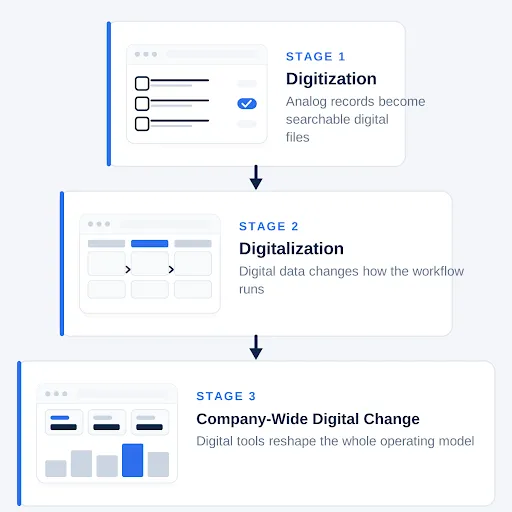
Stage 1: Digitization. The distributor scans paper delivery notes, catalogs, and service records into a searchable archive, so staff can find any record in seconds.
Stage 2: Digitalization. Orders arrive through an online portal, inventory updates automatically as shipments leave the warehouse, and a scheduling system routes service requests to the nearest technician. Handling becomes faster because the workflow itself has changed, not just the file format.
Stage 3: Company-wide digital change. After a year of order and service data, the distributor sees which equipment needs maintenance and when. It introduces subscription maintenance plans, merges sales and service into one customer team, and measures success by equipment uptime rather than units shipped.
Each stage depends on the one before it: the digitized archive feeds the portal, and the digitalized workflows supply the data the subscription model builds on, so skipping or rushing a stage undermines the next.
Which Digital Stage Is Your Business In?
Three questions help place your organization:
- Are most records still on paper or in isolated files? Digitization is the natural starting point.
- Are records digital, but people still re-enter data between systems or send approvals by email? Digitalization is the next area of focus.
- Do core workflows already run on digital tools, with data shared across teams? The next step is company-wide digital change, revisiting the operating model, roles and offerings, often structured around a digital transformation framework.
Most organizations sit at different stages in different departments, with finance often digitalized while operations is still digitizing records, a pattern that is manageable once each department has its own plan.
How Do You Move Between Digital Stages Successfully?
- Inventory first. List every paper and file-based record before choosing tools.
- Redesign before selecting software. Document how one workflow runs today, simplify it, and then choose the tool that fits the improved process.
- Set a measure for each stage. Use retrieval time for digitization, cycle time for digitalization, and customer and revenue results for company-wide change.
- Plan people alongside technology. Schedule training and role updates with each rollout.
- Decide the delivery model. Choose which work stays in-house and which is handled through outside digital transformation consulting.
What Is the Roadmap From Digitization to Digitalization?
- Audit: Map your records, systems and workflows, and note where data is re-entered manually.
- Digitize: Convert the records that feed your most frequent workflows, using consistent naming and structure.
- Digitalize: Redesign one workflow from start to finish, pilot it with a single team, measure the results and then extend it to other teams.
- Review: When several workflows run digitally and data is shared across teams, assess whether the operating model, roles and offerings are ready for the next phase of the digital transformation process.
How Can a Business Move Through All Three Stages With Measurable Results?
A business moves through all three stages with measurable results when each project starts with a recorded baseline, named data sources and a clear measure of success. Digitization prepares the information, digitalization improves the process, and company-wide digital change reshapes the organization. Read this way, digitization vs digitalization vs digital transformation describes one sequence that gives every department a clear next step, not three separate choices made alone.
Zethic designs digital workflow software around the data each stage is judged on, connecting the systems that hold baseline and result figures so the effect of each change can be traced once it goes live.